
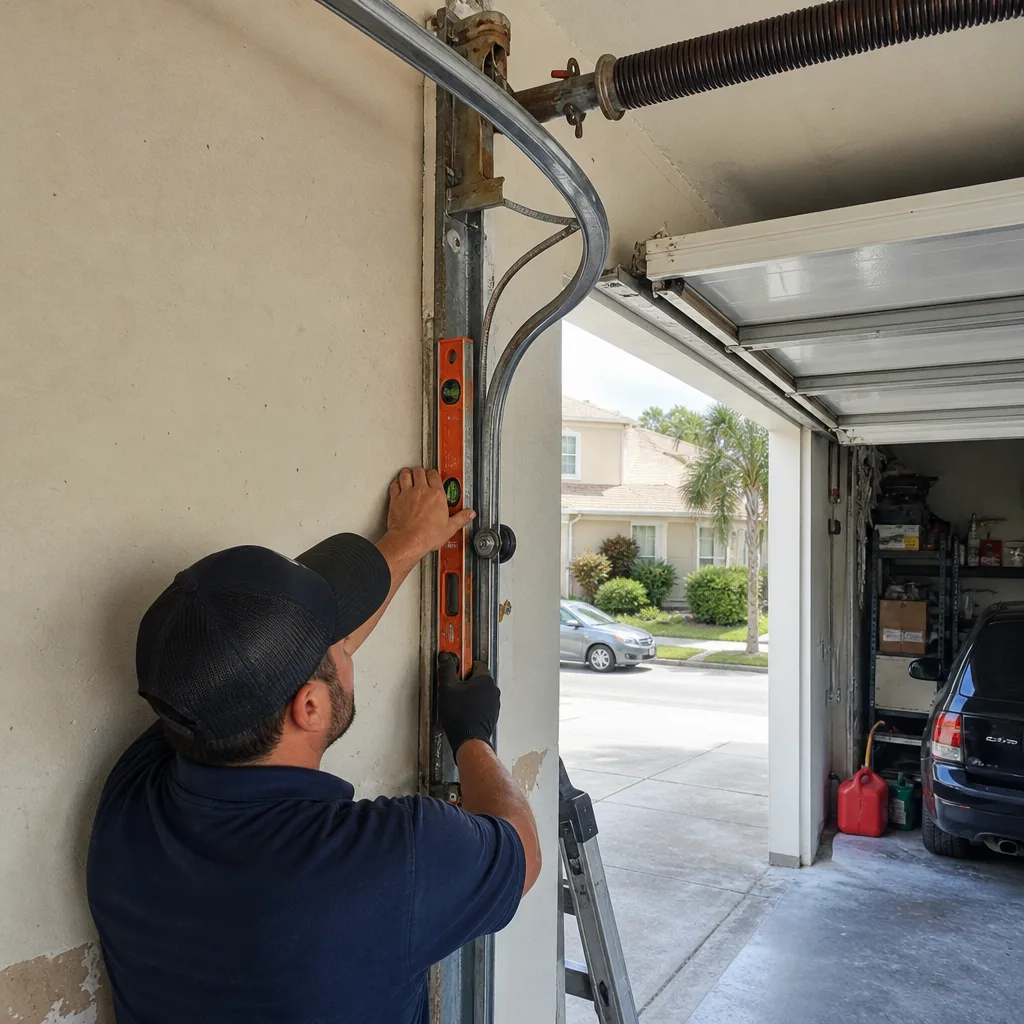
Last updated October 16, 2026
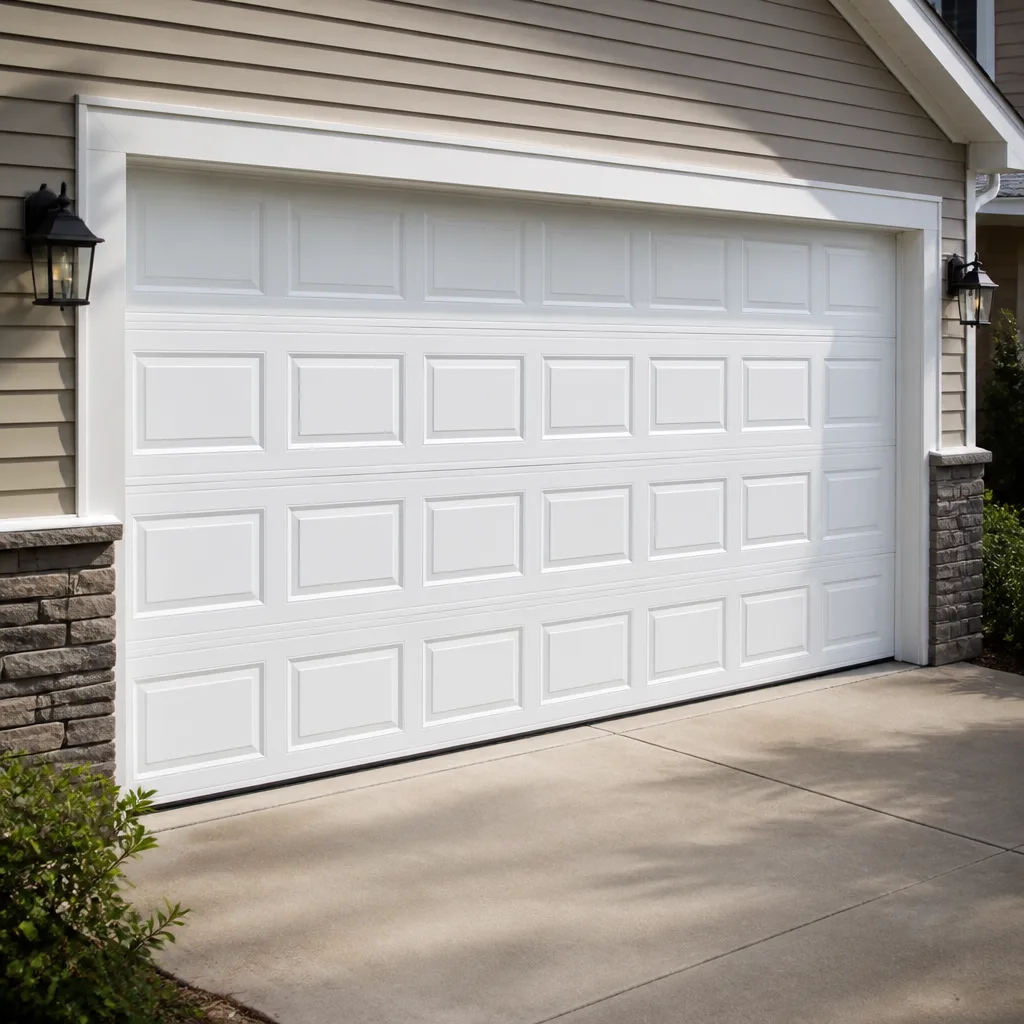 Raised-panel steel
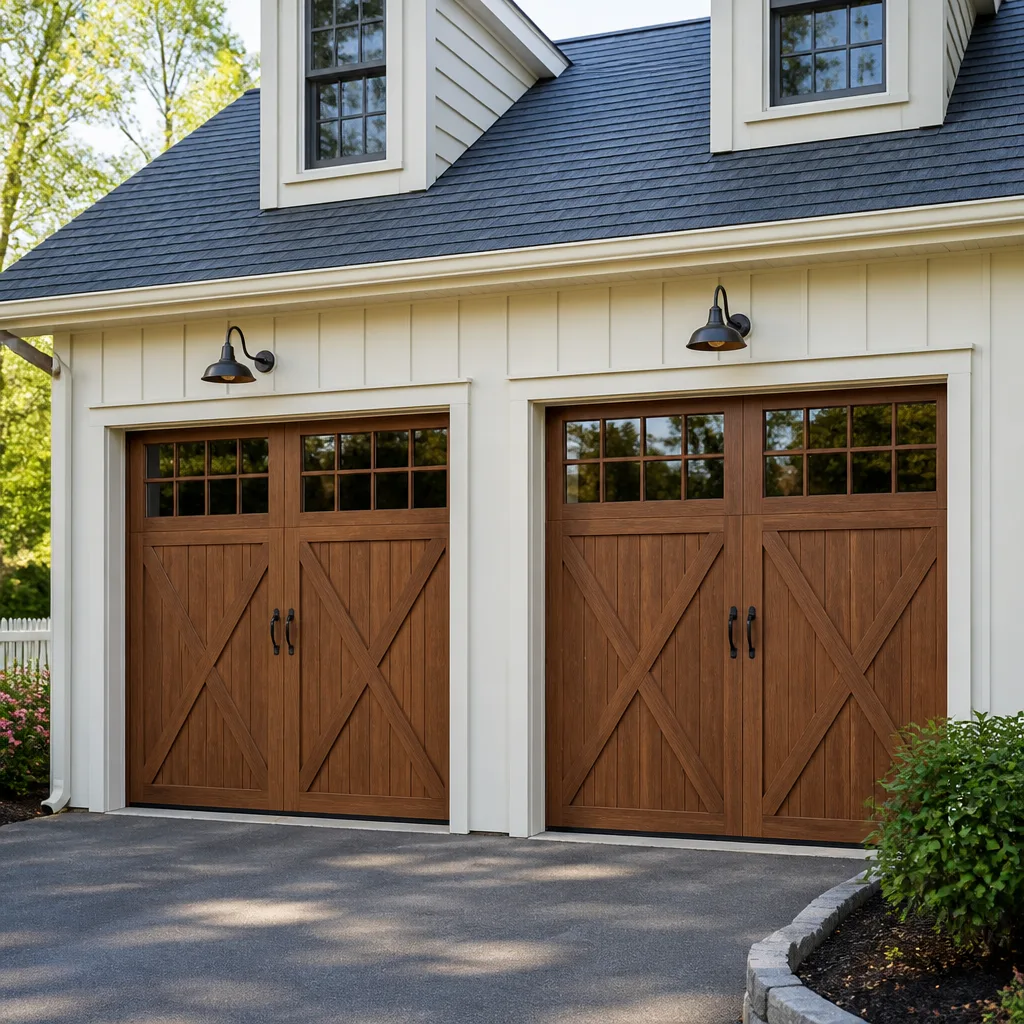 Carriage house
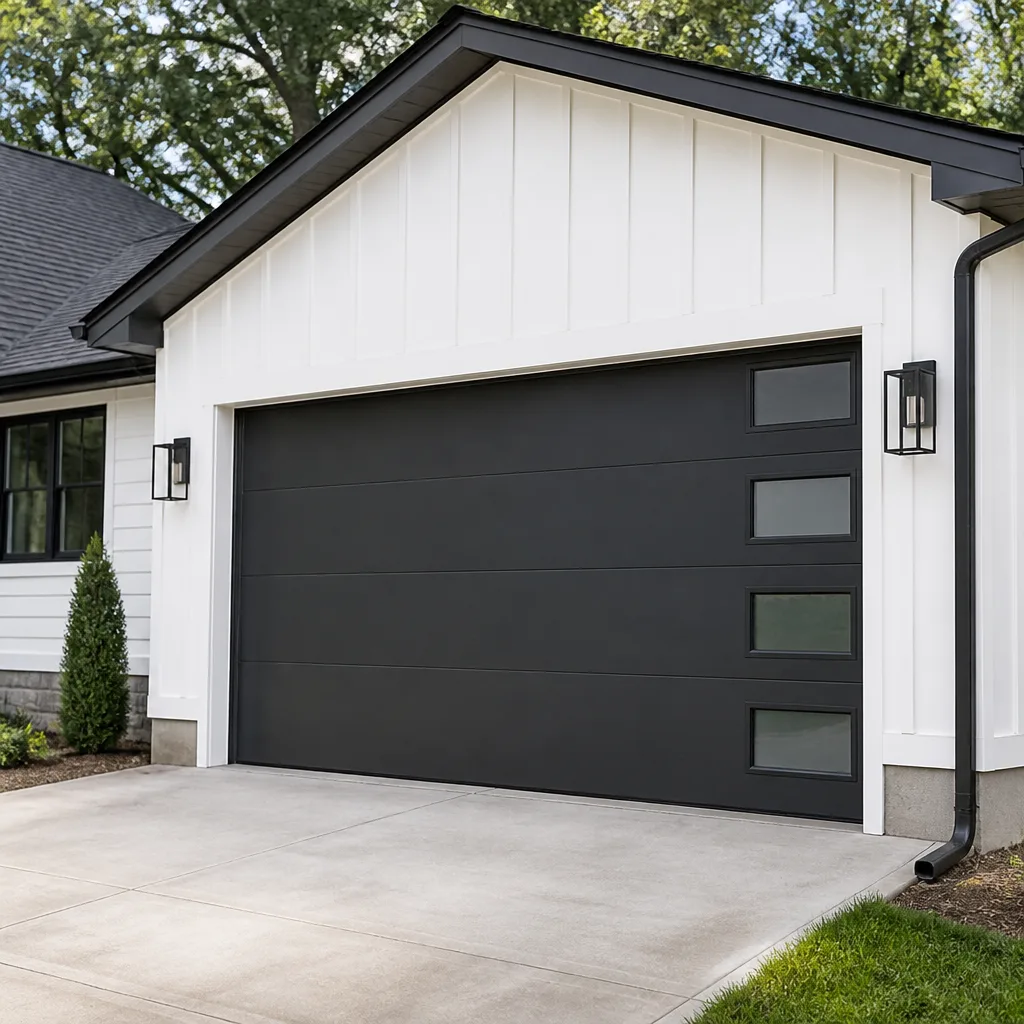 Modern flush
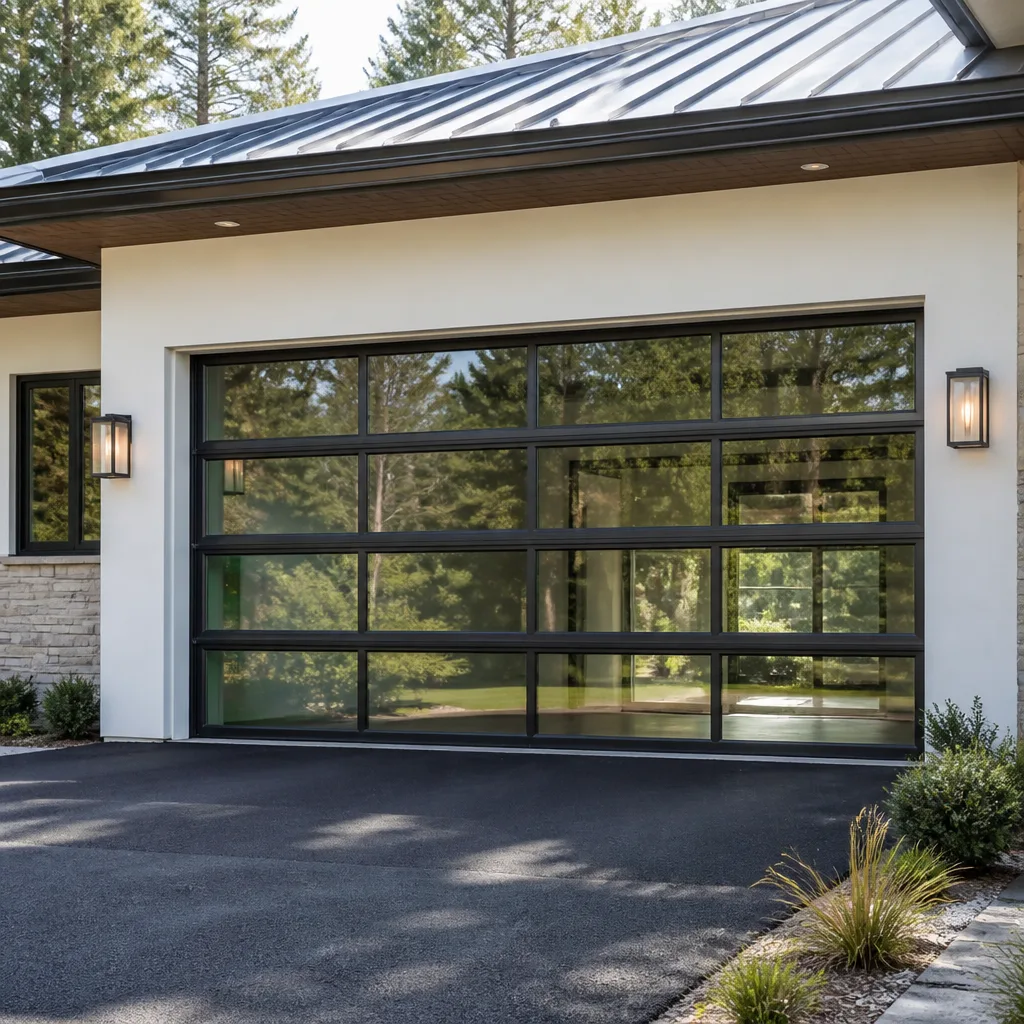 Full-view glass
 LiftMaster openers
 Chamberlain openers
Full 25-point door and opener safety check with every visit - springs, cables, rollers, tracks, and your LiftMaster or Chamberlain opener included
You get a price before we start. It does not change when the truck arrives.
Get your free estimateSeasonal Garage Door Care for Orlando: Year-Round Homeowner’s Guide
The worst month for garage door failures in Orlando isn’t December, it’s October. All summer long, your door’s hardware has been baking in 95-degree heat and soaking in 90% humidity. Then the first real cold snap hits, metal contracts, and everything that was quietly rusting since June finally gives out. We’ve been fixing doors in Orlando since 2002, and we can set our calendar by it. This guide-along with our Complete Guide to Garage Door in Orlando-throws out the national four-season framework and builds one around what actually happens to garage doors in Central Florida: two seasons, a hurricane window, and a humidity problem that never really goes away.
Styles & brands we work with
Quick Answer
Seasonal garage door maintenance in Orlando means following a two-season schedule: wet season prep in May (before hurricane season and daily thunderstorms start) and dry season prep in October (before the first cold snap stresses rusted hardware). The most important tasks are lubricating moving parts with a silicone-based lubricant, inspecting and tightening all bolts and brackets, testing the auto-reverse safety feature, and checking torsion springs for rust and wear. A professional tune-up in Orlando typically runs $75 to $150, and catching problems early prevents $200 to $400 emergency repairs later. See our Garage Door Cost Breakdown: The Orlando Homeowner’s Reference for 2026 for detailed pricing.
Table of Contents
- Why Orlando’s Climate Is Harder on Garage Doors Than Any Four-Season City
- The Two-Season Orlando Maintenance Framework
- Wet Season Prep: Your May Checklist (Before Hurricane Season Starts)
- Pre-Hurricane Season: The Hardware Inspection That Determines Whether Your Door Survives a Named Storm
- How Orlando’s Summer Humidity Accelerates Metal Fatigue (and What to Do About It)
- Dry Season Prep: Your October Checklist (Before the First Cold Snap)
- Why Garage Door Springs Snap Most Often in November Through January in Florida
- The Post-Summer Inspection Checklist: Catching Damage Before It Becomes a Mid-Winter Emergency
- Common Mistakes to Avoid
- When to Call a Professional
- Frequently Asked Questions
- The Bottom Line
Why Orlando’s Climate Is Harder on Garage Doors Than Any Four-Season City
Homeowners moving to Orlando from up north often assume their garage door will last longer here because there’s no snow, no road salt, and no sub-zero temperatures. That assumption is wrong, and it’s an expensive one. What Orlando lacks in ice and salt, it makes up for with something far more corrosive: relentless humidity combined with intense UV exposure and a six-month storm season.
Here’s what your garage door is up against in Central Florida:
- Daily humidity above 80% from June through September. Moisture works its way into roller bearings, hinge pins, and spring coils. Rust forms fast, and rust is the number one killer of torsion springs.
- Intense UV radiation year-round. Orlando sits at roughly 28.5 degrees north latitude, meaning the sun beats down on your door at a steep angle nearly every day of the year. Paint fades, weatherstripping cracks, and nylon rollers degrade faster than they would in, say, Chicago.
- Daily thermal expansion and contraction. A metal garage door in Orlando can swing 40 degrees between the hottest part of the afternoon and the coolest part of the pre-dawn morning. That daily expansion and contraction slowly loosens bolts, brackets, and track mounts.
- Afternoon thunderstorms that arrive with almost no warning. From June through September, Orlando gets rain on roughly half of all days. Wind-driven rain finds its way into gaps that a dry climate would never expose.
- Hurricane-force wind potential. Even if a storm never makes direct landfall, outer bands regularly bring 40 to 60 mph gusts to the Orlando metro. A door with loose hardware or worn rollers takes real structural abuse in those conditions.
We’ve seen doors in Baldwin Park, College Park, and Winter Park fail in ways that would be rare in drier cities. The good news is that most of these failures are preventable with a maintenance schedule built around Orlando’s actual weather patterns, not a generic national calendar.
The Two-Season Orlando Maintenance Framework
Forget spring, summer, fall, and winter. In Orlando, your garage door only cares about two seasons: the wet season (June through September) and the dry season (October through May). Each season has its own set of threats, and each requires different maintenance tasks.
Wet Season (June through September): This is the stress test. Daily heat, daily humidity, daily thunderstorms, and the peak of hurricane season all overlap. Your focus during this season is preventing rust, ensuring drainage, and making sure the door can handle wind loads. You’re not doing major repairs now unless something breaks; you’re doing preventative checks and keeping moving parts lubricated.
Dry Season (October through May): This is the repair season. The first cold snaps in October and November cause metal to contract, which is when rust-weakened springs snap and loose hardware finally gives out. The dry season is when you should do your deeper maintenance: full hardware tightens, spring inspections, roller replacements, and any major repairs you’ve been putting off.
Here’s the framework in a simple table:
| Season | Months | Primary Threats | Maintenance Focus |
|---|---|---|---|
| Wet Season | June – September | Rust, humidity, wind, rain intrusion | Lubrication, weatherstripping, drainage, hurricane prep |
| Dry Season | October – May | Cold snap stress, spring failure, hardware loosening | Spring inspection, bolt tightening, roller replacement, repairs |
This framework is what we use when we do seasonal tune-ups for homeowners across Orlando. It’s built on 20-plus years of seeing what actually fails and when.
Wet Season Prep: Your May Checklist (Before Hurricane Season Starts)
May is the most important month on the Orlando garage door maintenance calendar. Hurricane season officially starts June 1, and the daily afternoon thunderstorms usually arrive within a week or two of that date. Everything you do in May is about hardening your door before the weather turns.
Here’s the complete wet season prep checklist, in order of importance:
- Lubricate all moving parts. Use a silicone-based spray lubricant (never WD-40, which is a cleaner, not a lubricant) on rollers, hinges, springs, and the opener chain or belt. In Orlando’s humidity, a dry roller is a rusting roller within weeks.
- Inspect and replace weatherstripping. The rubber seal along the bottom of the door and the vinyl trim around the frame are your first line of defense against wind-driven rain. Look for cracks, brittleness, and gaps. In Orlando, weatherstripping typically lasts 2 to 3 years before the UV breaks it down.
- Test the auto-reverse safety feature. Place a roll of paper towels or a 2×4 on the ground under the door and close it. The door should reverse within 2 seconds of contact. If it doesn’t, the safety sensors or the opener’s force settings need adjustment.
- Check the balance. Disconnect the opener (pull the red release cord) and manually lift the door halfway. It should stay in place. If it falls or rises on its own, the springs are losing tension, and that imbalance will cause premature spring failure.
- Tighten all bolts and brackets. Every bolt on the track, every hinge screw, every bracket holding the opener. Thermal expansion has been loosening these all spring. A hurricane gust will test every single one.
- Clear the drainage channels. Make sure water flows away from the base of the door. Standing water accelerates rust on the bottom panel and the track.
If you’re in Windermere, Dr. Phillips, or Hunters Creek, you know how fast afternoon storms can build. A door that’s been prepped in May will handle those storms without issue. One that hasn’t will start showing problems by August.
Pre-Hurricane Season: The Hardware Inspection That Determines Whether Your Door Survives a Named Storm
Garage doors are the largest opening in most Orlando homes, and they’re also the most common point of structural failure during a hurricane. When wind gets inside a garage, it pressurizes the house and can lift the roof off. That’s why building codes in Florida have strict requirements for garage door wind resistance, and why your pre-hurricane inspection matters more than almost any other maintenance task.
Here’s the hardware inspection you should do every May, before hurricane season is in full swing:
- Inspect the track brackets. Every bracket that holds the vertical and horizontal track to the wall or ceiling should be tight and rust-free. Loose brackets mean the door can twist under wind load. In Orlando’s humidity, rust on these brackets is the first sign they need replacement.
- Check the hinge pins and roller stems. Worn pins allow the panels to flex independently, which creates gaps for wind to grab. Rollers with flat spots or cracked nylon wheels are a sign the door isn’t tracking straight.
- Examine the struts. Many Orlando doors have horizontal reinforcement struts across the top panel. These are critical for wind resistance. If they’re bent, rusted, or missing, your door’s wind rating is compromised.
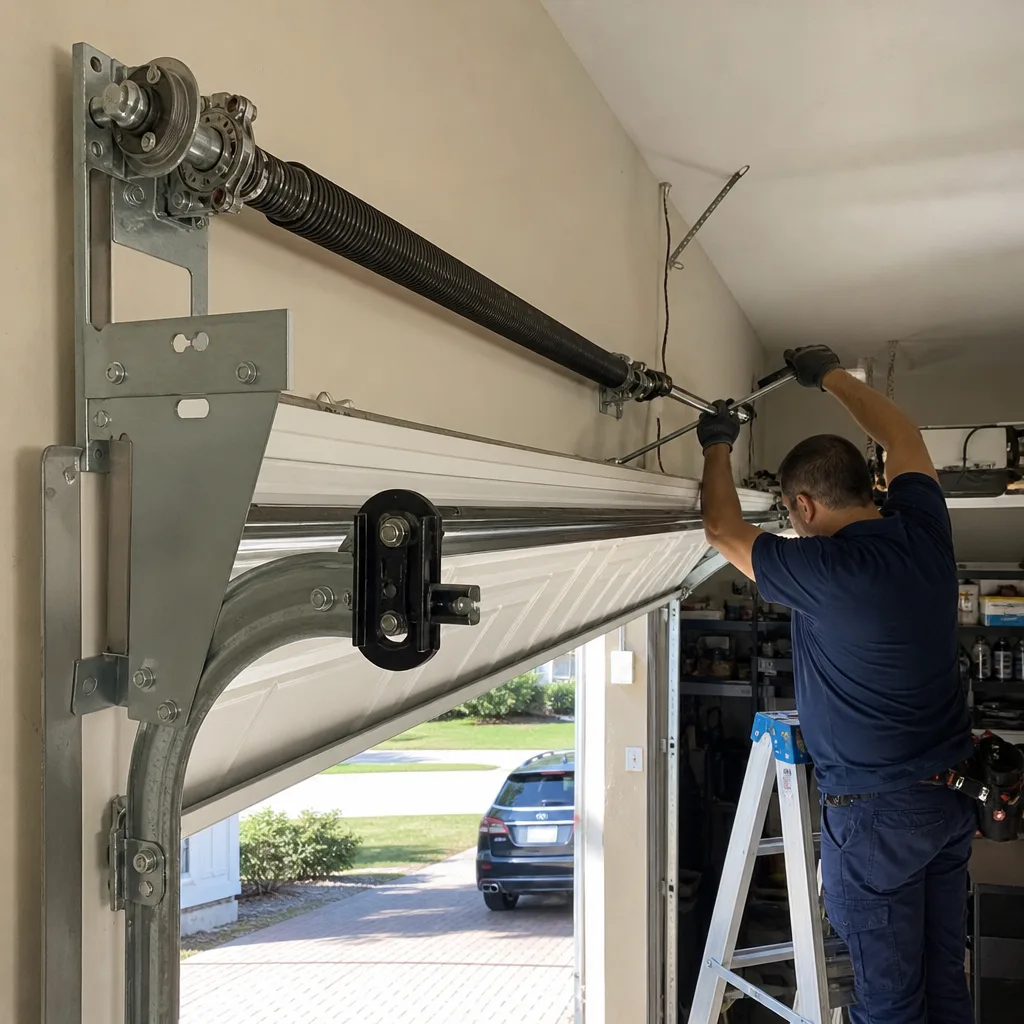
- Verify the spring system. A torsion spring that’s rusted, stretched, or showing gaps in the coils is a spring that will fail eventually. Under hurricane wind pressure, a weak spring system can allow the door to jump the track.
- Test the door under load. With the door closed, push against the center of each panel from inside. If any panel flexes significantly or makes a popping sound, the reinforcement or the panel itself is compromised.
A final note on hurricane prep for Orlando homeowners: if you have an older door that predates Florida’s stricter wind codes (most doors installed before the early 2000s), you may want to consider upgrading to a wind-rated door. The cost of a new wind-rated door in Orlando typically runs $1,200 to $3,500 installed, which is far less than the cost of repairing structural damage after a storm blows out your garage door.
How Orlando’s Summer Humidity Accelerates Metal Fatigue (and What to Do About It)
From June through September, Orlando’s relative humidity sits above 80% almost every day, often spiking to 90% or higher during afternoon thunderstorms. That humidity isn’t just uncomfortable; it’s actively corroding the metal components of your garage door system. Here’s the mechanism: moisture in the air condenses on metal surfaces as temperatures cool at night, forming a thin film of water. That water reacts with oxygen and the metal to form rust. The cycle repeats every single day for four months straight.
The components most vulnerable to this daily rust cycle are:
- Torsion springs (the horizontal coil above your door that does most of the lifting). Rust on the spring coils creates friction points, and friction creates weak spots where the spring eventually snaps.
- Roller bearings. Once rust gets inside a sealed bearing, the roller stops rolling and starts dragging, which strains the opener motor.
- Hinge pins. Rusted hinges cause the door panels to bind, which you’ll hear as a grinding or popping sound when the door opens.
- Track surfaces. Rust on the track creates friction against the rollers, which wears both components faster.
What actually works to slow this down in Orlando’s climate:
- Use a silicone-based lubricant, not a petroleum-based one. Silicone repels water and doesn’t attract dust. Petroleum-based lubricants get gummy in heat and hold moisture against the metal.
- Lubricate springs twice during the wet season. Most national guides say once a year. In Orlando’s humidity, once in May and once again in August is more realistic.
- Wipe down exposed metal before lubricating. A dry rag removes the surface moisture and dust that would otherwise get trapped under the lubricant film.
- Check for rust spots monthly during the wet season. Catch surface rust early, and a light sanding followed by lubrication will stop it. Let it go for three months, and you’re looking at component replacement.
We see this pattern every year in MetroWest, Conway, and Azalea Park. Doors that get twice-a-summer lubrication show markedly less rust than doors that skip it. It’s five minutes of work that extends the life of a $200 to $400 spring set by years.
Dry Season Prep: Your October Checklist (Before the First Cold Snap)
October in Orlando is a transition month. The daily thunderstorms taper off, humidity drops, and the first cold fronts of the dry season start pushing through. That first significant temperature drop, often 20 degrees or more in a single day, is when rust-weakened hardware fails. The metal contracts, and any component that’s been quietly corroding all summer finally breaks.
Here’s your October dry season prep checklist:
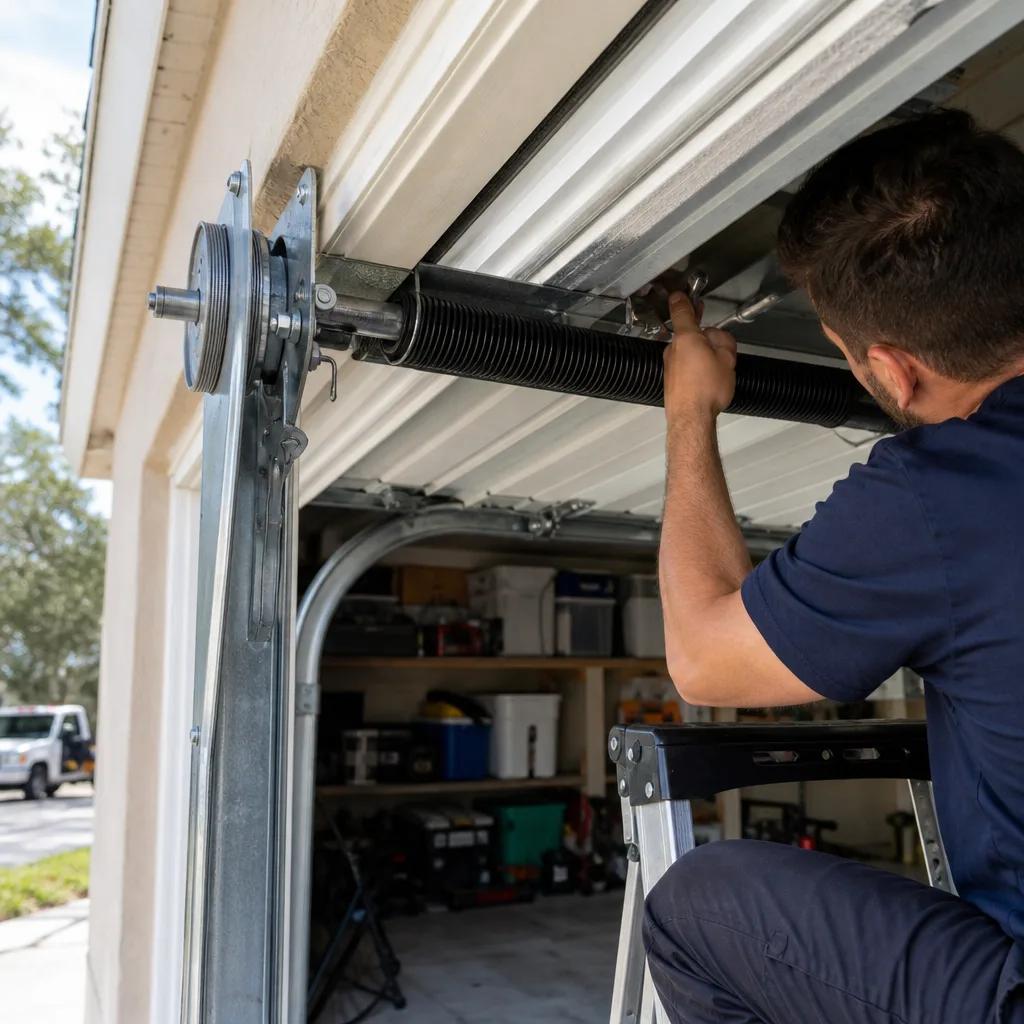
- Do a full spring inspection. Look for rust, gaps between coils, and any sign that the spring is stretching. A torsion spring in Orlando typically lasts 7 to 12 years, but humid summers shorten that lifespan. If your spring is showing rust and you haven’t replaced it in 8-plus years, it’s on borrowed time.
- Re-torque every bolt on the track and hinges. The daily thermal cycling of summer loosens hardware. October is the time to tighten everything back down before the metal contracts further in cooler weather.
- Test the opener’s force settings. Cooler weather changes how the door moves. If the opener is set too sensitive, the door will reverse for no reason. If it’s set too strong, it won’t reverse when it should. Test the auto-reverse again in October.
- Replace worn rollers. Nylon rollers in Orlando typically last 5 to 7 years. Steel rollers last longer but are noisier. If your rollers are chattering, wobbling, or showing flat spots, replace them before the door becomes a winter project.
- Clean and inspect the photo-eye sensors. Dust and spider webs accumulate over the summer. A quick wipe with a dry cloth keeps the sensors working reliably.
- Check the garage door opener battery backup. If you have a battery backup unit, test it in October. Power outages in Orlando spike during the dry season as cold fronts bring gusty winds.
If you do this October checklist consistently, you’ll catch most problems before they become emergencies in December or January, which is exactly when you don’t want to be dealing with a garage door that won’t open.
Why Garage Door Springs Snap Most Often in November Through January in Florida
It seems counterintuitive. Florida doesn’t get cold enough to make metal brittle the way Minnesota does. So why do we see a spike in spring failures starting in November and running through January? The answer is accumulated fatigue combined with thermal contraction, and it’s a pattern we’ve observed in Orlando for over two decades.
Here’s what’s actually happening:
- The summer rust cycle weakens the spring at a microscopic level. All summer long, daily condensation forms on the spring coils, causing pitting and surface rust. The spring weakens gradually, but it typically doesn’t fail during the summer because the metal is consistently warm and expanded.
- The first cold snap causes rapid contraction. When an Orlando cold front drops temperatures 20 to 30 degrees in a day, the spring coils contract. Any pitting or rust spot becomes a stress concentration point. The contraction pulls on those weak spots with more force than they can handle.
- The garage door gets used more in the holiday season. November and December mean more comings and goings: holiday shopping, family visits, decorations being pulled out of the garage. More cycles on an already-weakened spring accelerates the failure.
A torsion spring in Orlando typically costs $150 to $290 to replace, depending on spring size and type. You’ll see the exact number before we start, because we give a written price before any work begins. If your spring is more than 7 years old and you’re seeing rust on the coils, you’re better off replacing it proactively in October or November than waiting for it to snap on a cold January morning when you’re already late for work.
This is one of the most common calls we get during the dry season. Homeowners hear a loud bang from the garage, investigate, and find a snapped spring. If that happens to you, here’s the immediate concern: a snapped torsion spring isn’t a DIY fix. These springs are under hundreds of pounds of tension, and the stored energy can cause serious injury if released improperly. Call a professional. Garage door spring repair in Orlando is a same-day service for most Orlando homeowners, and it’s one of the three core services we handle at Marlow Garage Door Repair.
The Post-Summer Inspection Checklist: Catching Damage Before It Becomes a Mid-Winter Emergency
The most valuable maintenance you’ll do all year happens in late September or early October, right at the transition from wet season to dry season. This is the post-summer inspection, and its purpose is to find the damage that humidity, thunderstorms, and heat have caused before that damage turns into a cold-weather breakdown. If you only do one deep inspection a year, make it this one.
Here’s the complete post-summer inspection checklist we recommend for Orlando homeowners:
- Visual spring inspection. Look at the torsion spring above the door. Rust, gaps between coils, or a visible bow in the spring means it’s approaching end of life. A spring that’s lasted 8 or more Orlando summers is a candidate for proactive replacement.
- Track alignment check. Run the door and watch the track on both sides. Any wobble, binding, or scraping sound means the track has shifted. Orlando’s thermal cycling loosens track brackets over time, especially on west-facing doors that get the full afternoon sun.
- Roller condition. Listen for grinding or chattering. Worn rollers put extra strain on the opener and the hinges, and they get worse quickly once they start degrading.
- Weatherstripping check. Run your hand along the bottom seal and the side trim. Cracks, gaps, and brittleness mean it’s time to replace. In Orlando, weatherstripping replacement is a $60 to $150 job and it pays for itself in lower cooling bills, since your garage is a major source of heat intrusion.
- Opener force and limit settings. The opener should reverse with light resistance and stop at the right point every time. Summer heat can drift the limit settings on older openers.
- Panel condition. Walk around the door and look at each panel. Dents from summer storms, paint bubbling from moisture, and rust spots at the bottom corners are all signs that the door needs attention before the dry season.
- Battery and remote function. Test all remotes, keypads, and the opener’s battery backup. The last thing you want is a dead remote on a cold January morning.
This inspection takes about 30 minutes if you’re thorough, and it’s the single highest-value maintenance task on the Orlando seasonal calendar. If you find problems during the inspection, the dry season (October through May) is the ideal time to fix them, because the weather is milder and you’re not fighting daily rain.
Common Mistakes to Avoid
- Following a national four-season maintenance schedule. National guides tell you to do a spring tune-up in April and a fall tune-up in October. In Orlando, the April tune-up is too early (hurricane prep matters more in May) and the October tune-up is too late (the first cold snap often hits in late October). We’ve watched homeowners follow generic schedules and miss the window that matters here.
- Using WD-40 instead of a silicone-based lubricant. WD-40 is a solvent and water displacer. It strips existing lubricant and leaves metal vulnerable to Orlando’s humidity. Use a silicone spray or white lithium grease on moving parts instead.
- Ignoring rust on springs. A little surface rust on a torsion spring isn’t cosmetic. In Orlando’s climate, that rust is the beginning of the end for the spring. Once rust takes hold, the spring’s useful life is measured in months, not years.
- Skipping the balance test. A door that’s out of balance puts twice the normal strain on the opener motor and accelerates spring wear. The balance test takes 30 seconds, and most homeowners never do it.
- Waiting until after hurricane season to inspect the door. By June 1, you should already know your door’s wind-readiness. Doing your inspection in August is discovering problems when you can’t get them fixed before the next storm.
- Assuming a new door is maintenance-free. New doors still have springs, rollers, hinges, and tracks. They need the same seasonal attention. Clopay and Amarr doors come with good factory warranties, but a warranty doesn’t cover damage from neglected maintenance.
- Leaving a snapped spring until spring. If a spring snaps in January, don’t leave the door stuck until March. A door with one broken spring puts dangerous strain on the remaining spring, and the bonus is that the door becomes nearly impossible to lift manually. Garage door repair in Orlando is available year-round, including same-day spring replacement.
When to Call a Professional
Most of the maintenance tasks in this guide are homeowner-friendly. Lubrication, weatherstripping checks, balance tests, and visual inspections take minutes and require no special tools. But some situations call for a trained technician, and knowing the difference-covered in our DIY vs Professional Garage Door: The Orlando Homeowner’s Decision Guide-saves you time, money, and potential injury.
Call a professional when: your torsion spring snaps or shows visible rust and gaps (torsion springs are under hundreds of pounds of tension and release that energy violently if handled incorrectly); your door is off its track, which usually signals a broken roller or a bent track; your opener makes grinding noises or struggles to lift the door, which points to motor or gear failure; your cables are frayed or loose (the cables work alongside the springs to carry tension, and a snapping cable can whip with serious force); or your door was installed before the early 2000s and has never been upgraded for Florida wind standards.
For any of these, Marlow Garage Door Repair Orlando offers free estimates in Orlando – call (850) 790-4744. We’ll give you a written price before any work starts, backed by our 365-Day Done Right Promise. Garage door cable repair in Orlando is one of the services we handle most often during the dry season, when cable failures spike right alongside spring failures.
Frequently Asked Questions
In Orlando’s climate, you should lubricate your garage door’s moving parts twice during the wet season (once in May before hurricane season, once in August at peak humidity) and once more in October at the start of the dry season. Use a silicone-based spray lubricant on rollers, hinges, springs, and the opener chain or belt. This is more frequent than the once-a-year recommendation you’ll see in national guides, and it’s justified by the daily humidity cycles that accelerate rust in Central Florida. If you’re not sure whether your door is properly lubricated, call (850) 790-4744 and we’ll check it during a free estimate.
A professional seasonal tune-up in Orlando typically runs $75 to $150, depending on the condition of the door and the number of components that need attention. That’s significantly less than the $200 to $400 emergency repairs that preventative maintenance avoids. At Marlow Garage Door Repair, every tune-up includes a written price before we start, and the work is covered by our 365-Day Done Right Promise. Call (850) 790-4744 for an exact quote – estimates are free.
Yes. Garage doors are the largest opening in your home and the most common point of structural failure during a hurricane. Florida building codes require wind-rated doors for new construction and major renovations, but many older Orlando homes have doors that don’t meet current standards. If your door predates the early 2000s and has never been upgraded, a pre-hurricane-season inspection in May is the minimum essential step. In some cases, upgrading to a wind-rated door (typically $1,200 to $3,500 installed) is the smarter investment than reinforcing an aging door.
Your spring didn’t snap because of the cold; it snapped because months of Orlando summer humidity weakened the metal through daily condensation and rust formation. The first significant cold front of the dry season causes the metal to contract rapidly, and that contraction is what finally breaks a spring that’s been quietly degrading since June. This is why we see a spike in garage door spring repair calls in Orlando from November through January. If your spring is more than 7 years old and showing rust, proactive replacement in October costs the same as emergency replacement in January, but without the inconvenience.
Routine maintenance like lubrication, weatherstripping checks, balance testing, and visual inspections are all homeowner-friendly and take less than an hour total. But anything involving the torsion spring, the cables, or the opener’s motor should be left to a professional. Torsion springs are under hundreds of pounds of tension and can cause serious injury if mishandled. Our recommendation for Orlando homeowners: do the simple maintenance yourself, and have a professional tune-up done once a year, ideally in May before hurricane season. A professional will catch issues you’ll miss, and the $75 to $150 annual cost is cheap insurance.
Our technicians are trained to service eight major garage door brands, including Clopay, Amarr, Wayne Dalton, and Craftsman, as well as LiftMaster, Chamberlain, Genie, and Raynor openers. Whether your door is a builder-grade Wayne Dalton from a 2008 subdivision in Lake Nona or a custom Amarr door in Winter Park, our techs arrive already familiar with your specific hardware. That familiarity means faster diagnosis and fewer return trips. Call (850) 790-4744 to book a free estimate, or check our Marlow Garage Door Repair Orlando home page for more details on our service area.
The Bottom Line
Orlando’s garage doors fail on a predictable schedule, and that schedule is driven by our climate, not by the national seasons. The wet season rusts your hardware; the dry season breaks it. The fix is equally predictable: prep your door in May before the humidity and hurricanes arrive, inspect it thoroughly in October before the first cold snap, and lubricate it more often than any national guide suggests. The $75 to $150 you spend on seasonal maintenance is the cheapest insurance you’ll ever buy against a $400 emergency repair. Jaylen Ross and the team at Marlow Garage Door Repair Orlando have been helping Orlando homeowners with this exact seasonal rhythm since 2002, and we’re always available for a free estimate at (850) 790-4744. For more guides & resources, visit our blog.
Written by Jaylen Ross, Owner at Marlow Garage Door Repair Orlando, serving Orlando since 2002.
See the difference
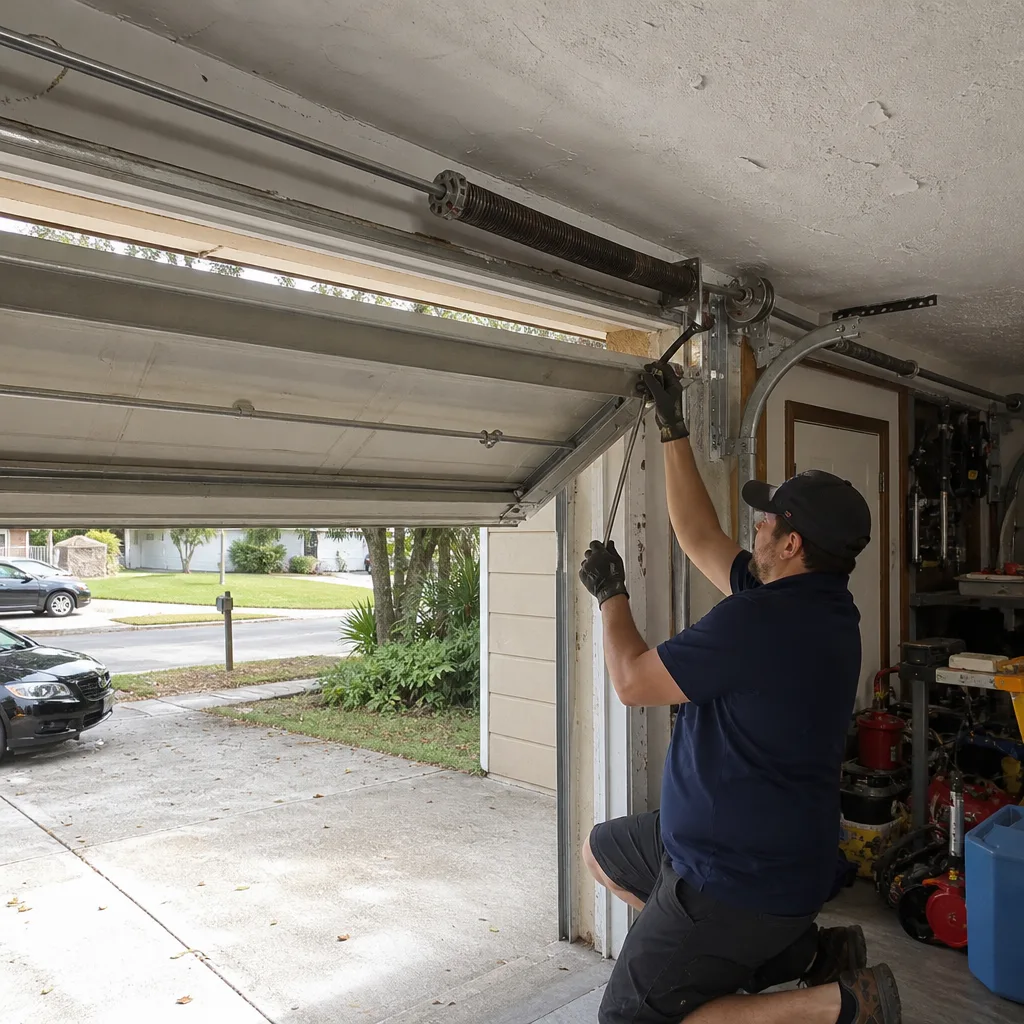 Before
 After
After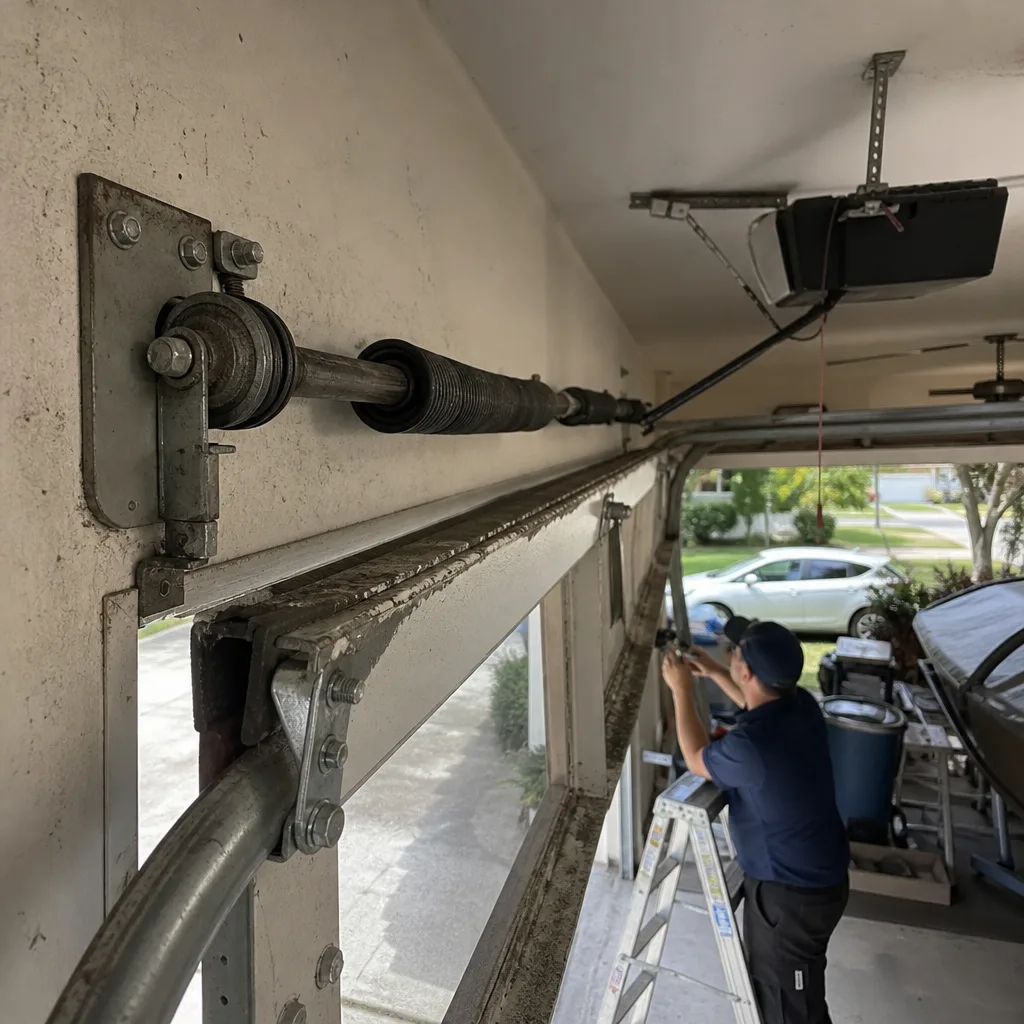 Before
 After
After Before
 After
After