
Last updated October 16, 2026
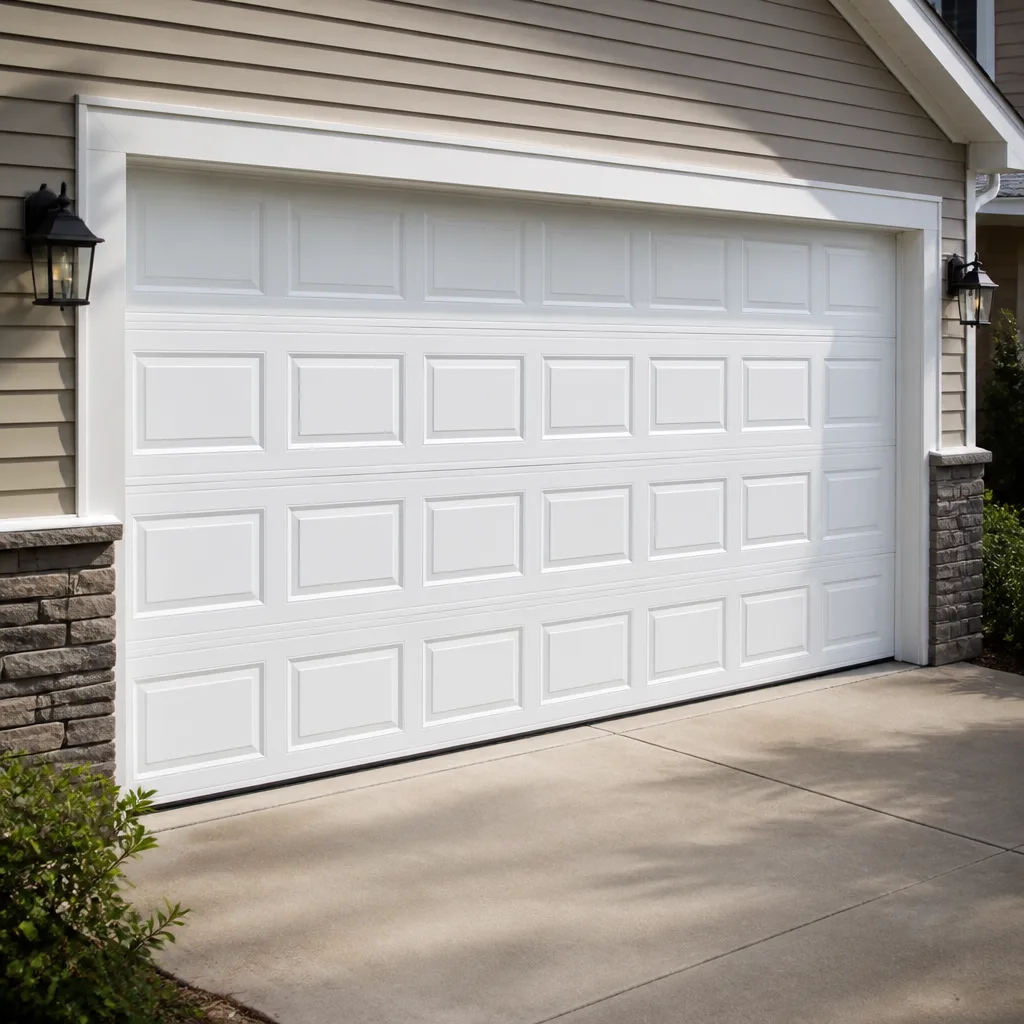 Raised-panel steel
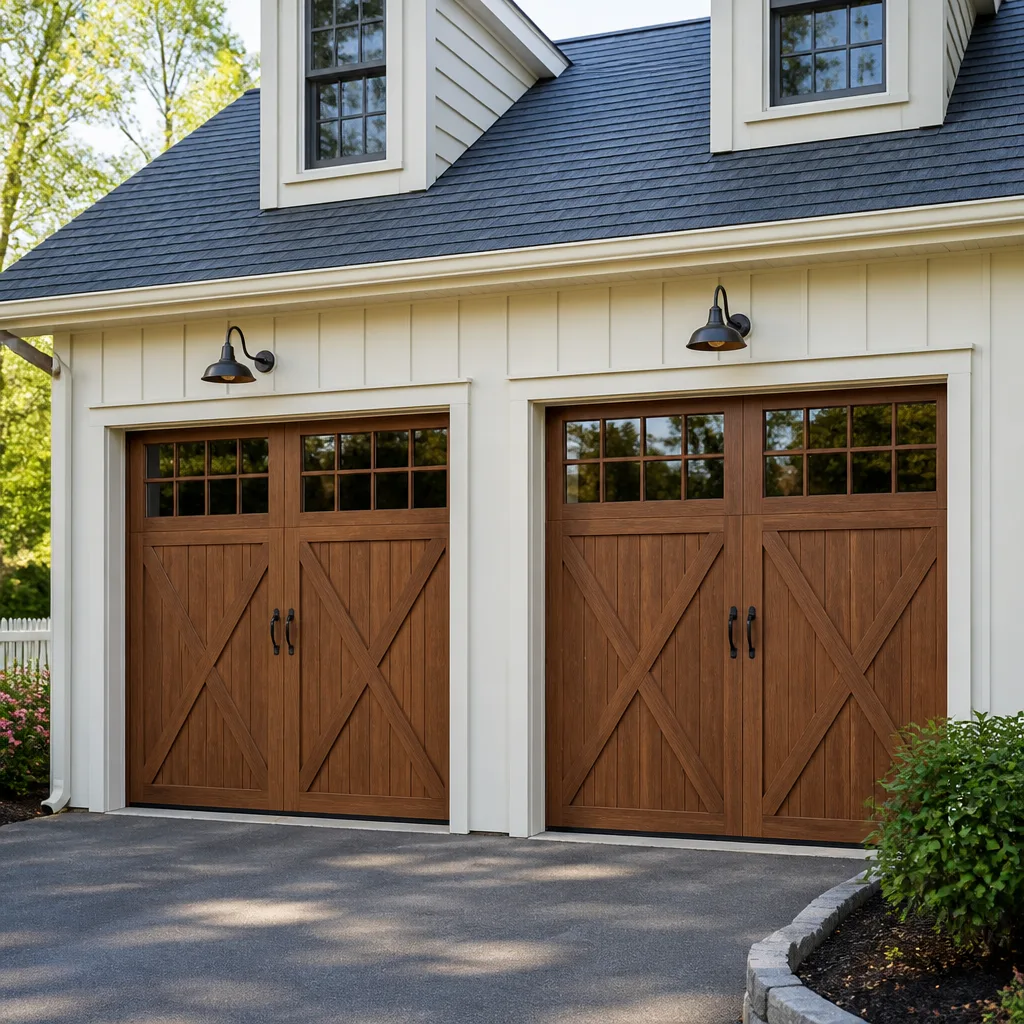 Carriage house
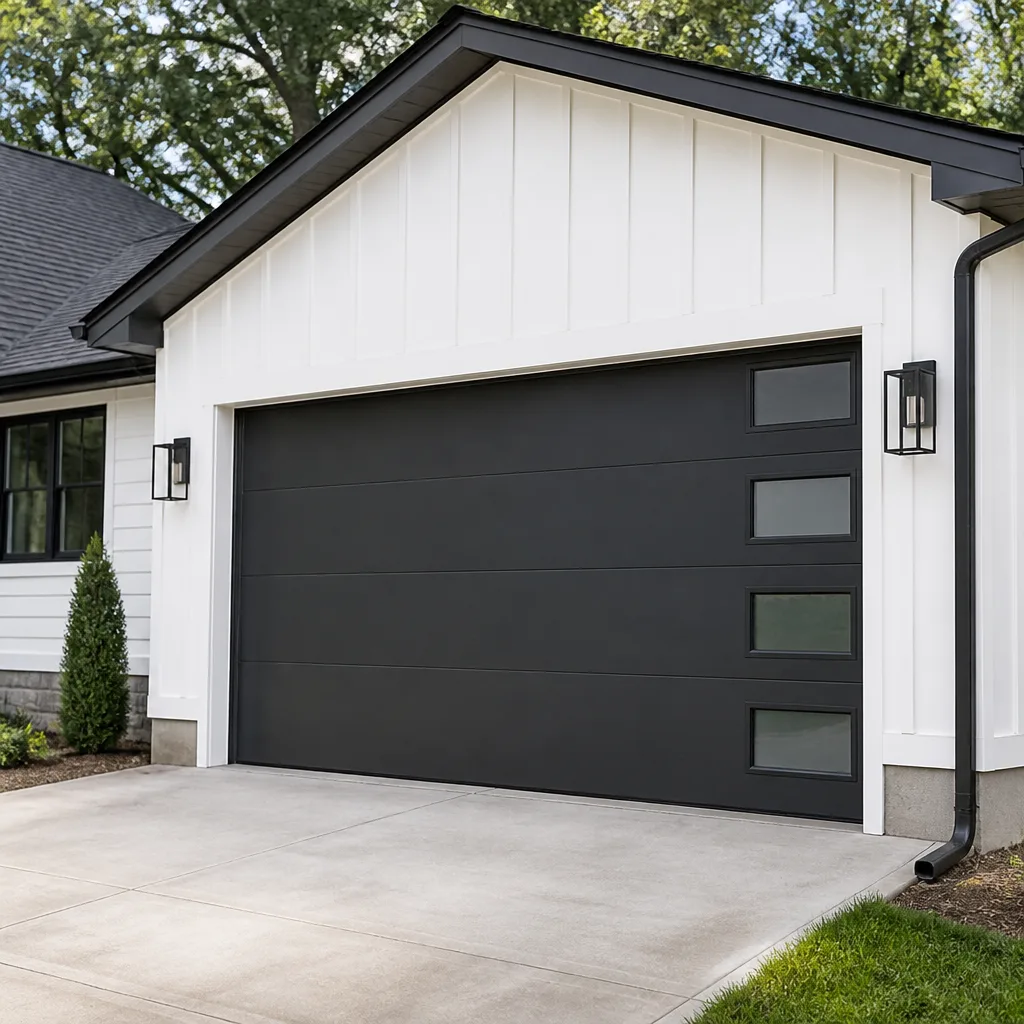 Modern flush
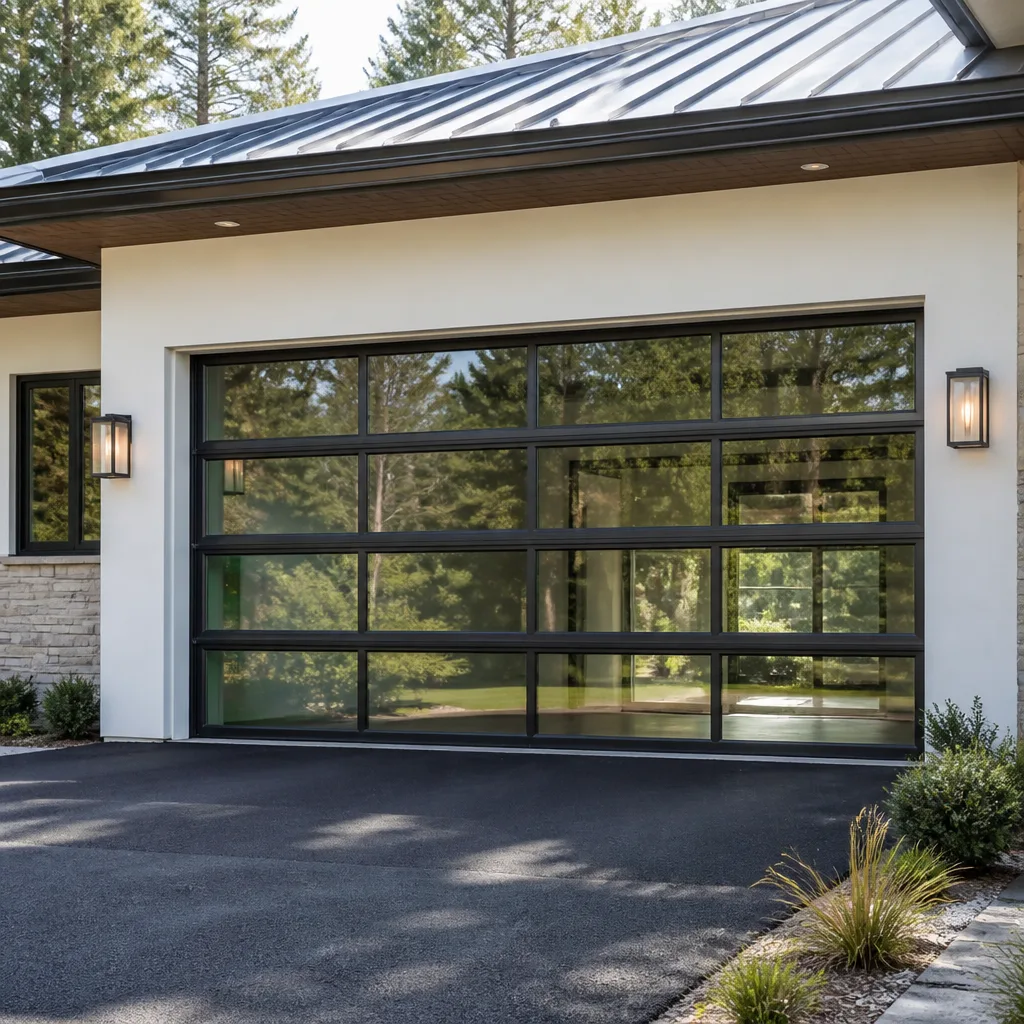 Full-view glass
 LiftMaster openers
 Chamberlain openers
Full 25-point door and opener safety check with every visit - springs, cables, rollers, tracks, and your LiftMaster or Chamberlain opener included
You get a price before we start. It does not change when the truck arrives.
Get your free estimateDIY vs Professional Garage Door: The Orlando Homeowner’s Decision Guide
Here’s the thing nobody tells you until it’s too late: a garage door weighs between 130 and 400 pounds, and the torsion spring above it is holding back enough stored energy to send a wrench through drywall at highway speed. But the weight and the spring aren’t even the most expensive part of the DIY gamble in Orlando. Florida building code requires a permit for garage door replacement, and doing that job yourself without one can legally block your home sale years later. This guide walks through exactly which jobs you can safely tackle, which ones will void your warranty, and which ones Florida law says you shouldn’t touch without a licensed contractor.
Quick Answer
Most Orlando homeowners can safely handle lubrication, sensor alignment, weather seal replacement, and the monthly balance test. Garage door spring replacement and cable repair should be left to a professional, because torsion springs store lethal kinetic energy and cables are under constant high tension. In Florida, a full garage door replacement or structural opener installation without a permit can void your homeowner’s insurance and complicate a future home sale.
Styles & brands we work with
Table of Contents
- The 10-Minute Rule: How to Decide What’s DIY
- The Florida Permit Law That Changes Everything
- DIY Repairs That Void Your Warranty (and How to Check)
- The Real Cost Comparison: DIY vs Professional in Orlando
- The One DIY Task Every Orlando Homeowner Should Do: The Balance Test
- What Orlando’s Climate Does to Garage Doors
- Torsion Springs and Cables: Why We Say Call a Pro
- Common Mistakes to Avoid
- When to Call a Professional
- Frequently Asked Questions
The 10-Minute Rule: How to Decide What’s DIY
We’ve been fixing garage doors in Orlando since 2002, and we’ve arrived at a lot of homes where a homeowner’s weekend project turned into a $400 repair. The pattern is almost always the same: the job looked simple in the YouTube video, but the door was older, the parts were rusted, or the previous installer did something unconventional. So we developed a simple filter we walk our own friends through.
Ask yourself: Does this job involve stored energy? If yes, it’s not a DIY job. Torsion springs, extension springs, cables, and the bottom bracket all hold tension even when the door is fully open. If you release that tension incorrectly, the result is a trip to the emergency room, not a fixed door. The second question: Does this job involve attaching anything structural to your house? If yes, it likely requires a permit in Orlando, and permits come with rules about who can pull them.
Here’s the decision matrix we use when customers ask us what they can handle themselves:
| Safe DIY | Proceed with Caution | Never DIY |
|---|---|---|
| Lubricating rollers, hinges, and springs with a silicone-based spray | Replacing rollers (cheap DIY parts can shatter; know what you’re buying) | Torsion spring replacement (lethal stored energy) |
| Cleaning and aligning photo-eye sensors | Replacing a remote or keypad (pairing issues with newer openers) | Extension spring replacement (still high-tension, still dangerous) |
| Replacing bottom weather seal (rubber strip slides into track) | Tightening loose bolts and hinges (use correct torque; don’t overtighten) | Cable replacement (cables hold the spring’s tension; a snapping cable can sever fingers) |
| The monthly balance test (we’ll walk you through it below) | Replacing the opener’s safety sensors | Full garage door replacement in Florida (permit required; must be pulled by licensed contractor) |
| Replacing batteries in remotes and keypads | Adjusting opener force settings (can create a safety hazard if done wrong) | Replacing or relocating garage door tracks (structural work; requires permit in many Orlando jurisdictions) |
One Orlando-specific note: if you live in a neighborhood with an HOA, like Baldwin Park or Celebration, your HOA covenants may also restrict exterior modifications, including garage door replacements, to approved styles and colors. Check before you buy a new door.
The Florida Permit Law That Changes Everything
Florida Statute 553.79 requires a building permit for any residential garage door replacement that involves structural modification, and many cities in the Orlando metro, including Orlando proper and Winter Park, treat even like-for-like door replacement as permit-required work. The relevant section of the Florida Building Code (Chapter 1, Section 105) is clear: a permit is required to install or replace a garage door, and the permit must be pulled by a licensed contractor or the homeowner acting as an owner-builder.
Here’s what that means in practice for an Orlando homeowner:
- If you pull an owner-builder permit and do the work yourself, you are legally responsible for the installation. If it fails, your insurance company can deny the claim. And when you sell the house, the buyer’s inspector may flag the unpermitted work, which can delay or kill the sale.
- If you hire a contractor who doesn’t pull a permit, the same risk transfers to you as the homeowner. An unpermitted garage door replacement can sit quietly in county records until you try to sell. Then it surfaces.
- If you hire a licensed contractor who pulls the permit, the city inspects the work, which protects you in a future sale and gives you a paper trail for insurance purposes.
We’re not saying this to scare anyone away from buying a new door. But in our experience, a surprising number of Orlando homeowners don’t learn about the permit requirement until the house is under contract and the title company asks for the paperwork. The permit for a standard residential garage door replacement in Orlando typically runs $50 to $150 depending on the municipality, and the inspection is straightforward. It’s the cheapest insurance you’ll ever buy against a future sale problem.
Related: Garage Door Repair in Orlando covers the full scope of repair work we handle.
DIY Repairs That Void Your Warranty (and How to Check)
Most Orlando homeowners don’t read the fine print on their garage door or opener warranty until it’s too late. That’s a problem, because the language in most warranty documents from LiftMaster, Chamberlain, and Clopay is surprisingly consistent: unauthorized repair or modification voids coverage.
Here’s the specific language to look for in your warranty document: “This warranty does not cover damage caused by repair or alteration by anyone other than a qualified professional technician.” Or a variation: “Any modification or service performed by unqualified persons voids this warranty.” If your warranty includes that clause, here’s what it means for DIY work:
- Replacing a spring yourself voids the door warranty, even if the spring wasn’t the original part that later fails. Manufacturers consider the spring to be integral to the door system.
- Adjusting the opener’s force or travel limits without proper training can void the opener warranty. If the logic board fails later, even unrelated to your adjustment, the manufacturer may deny the claim.
- Using aftermarket parts not specified by the manufacturer can void coverage on the components they connect to. A cheap aftermarket spring that breaks can damage the opener, and the opener manufacturer may not cover it.
- Drilling into the door to mount a handle, lock, or reinforcement strut can void the door panel warranty. We see this in Orlando on a regular basis, especially on insulated doors in neighborhoods like Thornton Park where homeowners add aftermarket locks.
The easiest way to check: locate your warranty document, find the “Exclusions” section, and look for the word “unauthorized.” If it’s there, assume any repair or modification not performed by a qualified professional is a risk. Most garage door warranties run 3 to 5 years on hardware and 10 years or lifetime on springs, so the downside is real. That said, basic maintenance like lubrication and cleaning doesn’t void the warranty, because the manufacturer’s manual specifically tells you to do it.
The Real Cost Comparison: DIY vs Professional in Orlando
Let’s be honest about what DIY actually costs. The parts bill is just the starting line. Here’s our Garage Door Cost Breakdown: The Orlando Homeowner’s Reference for 2026 for a typical torsion spring replacement, comparing DIY to hiring a pro:
| Cost Category | DIY | Professional (Marlow Garage Door Repair Orlando) |
|---|---|---|
| Torsion spring (pair) | $60 to $120 | Included in quote |
| Winding bars | $25 to $45 | Not needed |
| Torsion spring tool kit or individual tools | $15 to $35 | Not needed |
| Time (research + attempt + correction) | 3 to 8 hours | 0 hours (we handle it) |
| Risk of a second service call when the DIY fix fails | $275 to $500 | Covered by 365-Day Done Right Promise |
| Emergency room visit (if the spring snaps) | $500 to $5,000+ | $0 |
| Total realistic cost | $375 to $700+ (plus medical risk) | $150 to $290 (written price before we start) |
Spring replacement in Orlando typically runs $150 to $290, depending on spring type. You’ll see the exact number before we start, and that number doesn’t change once we arrive. The DIY parts cost might look like a savings at $60 to $120, but once you factor in the tools you’ll buy and never use again, the half-day of your weekend, and the very real risk that the spring doesn’t seat correctly, the math stops working in your favor.
There’s another cost we should mention: when a DIY fix fails, the door often fails in a way that makes it worse than the original problem. A spring that’s wound in the wrong direction can damage the torsion tube. A cable that slips off a drum can bend the track. We’ve arrived at DIY jobs in Orlando where the homeowner’s original $50 fix turned into a $400 repair, because the first mistake caused a cascade.
Related: Garage Door Spring Repair in Orlando explains our full process.
The One DIY Task Every Orlando Homeowner Should Do: The Balance Test
This is the single most useful maintenance habit from our Garage Door Repair Maintenance Checklist for Orlando Homeowners, and it takes two minutes. A properly balanced garage door should lift smoothly with one hand, stay in place halfway open, and settle quietly when closed. If your door doesn’t do those three things, something is wearing out, and catching it early is the cheapest repair you’ll ever make.
Here’s the exact two-minute test:
- Close the garage door and pull the emergency release cord (the red cord hanging from the opener rail). This disconnects the opener so you’re manually lifting the door.
- Lift the door manually to about waist height, around three feet off the ground.
- Let go. A balanced door will stay in place. If it drops or slams down, the springs are worn. If it shoots up, the springs are over-tensioned.
- Lift it to shoulder height and let go again. Same test, different position. A balanced door stays.
- Close the door manually, then re-engage the opener by pulling the red release cord toward the door until it clicks.
Run this test once a month. In our Orlando service area, we recommend doing it more often if your door gets heavy daily use, say in a household with multiple drivers in College Park or Delaney Park. A door that starts failing the balance test in month one is giving you a 60-day warning before the spring snaps.
If your door fails the balance test, don’t adjust anything yourself. That’s a spring issue, and springs are the one place where even experienced DIYers get hurt. Call a professional, get a written price, and let someone with winding bars and torque specs handle it.
What Orlando’s Climate Does to Garage Doors
Orlando’s heat and humidity are hard on every part of a garage door system, and if you’re comparing DIY advice from a national website to what’s actually happening to your door in Florida, the climate difference matters. Here’s what we see in our service area that general tutorials don’t mention:
- Rust on springs and hardware. The summer humidity in Orlando accelerates rust on torsion springs, especially in uninsulated garages. A rusty spring eventually loses its tension or snaps. This is the single most common repair call we handle in August and September.
- Track warping from heat. Garage door tracks expand and contract with temperature swings. In Orlando, an un-insulated garage door can reach 130 degrees in a summer afternoon. Repeated expansion and contraction can warp or loosen tracks over time, which leads to binding and jerky operation.
- Hurricane season wind loads. Florida building code requires garage doors to withstand specific wind loads, and if you’re buying a new door in Orlando, it needs a Florida Product Approval number or a Miami-Dade NOA (Notice of Acceptance). A national big-box door might not meet this standard. This is a real reason to buy through a local pro who knows the code.
- Mold and rot on wooden door panels. Older wooden garage doors in Orlando neighborhoods like Colonialtown and Audubon Park are prone to mold and rot. If your door has wooden panels, inspect the bottom panel regularly for soft spots.
The climate angle is also a reason to think carefully about DIY spring replacement. A rusty spring doesn’t behave the way a clean spring does in a tutorial video. It binds, it creaks, and it can release suddenly during winding. The same job that’s moderately dangerous in a dry climate is meaningfully more dangerous in Orlando’s humidity.
Torsion Springs and Cables: Why We Say Call a Pro
We’ve said it a few times in this guide, and we’re going to say it once more clearly: do not attempt a torsion spring or cable replacement yourself. This is not a “know your limits” lecture. It’s a physical safety fact.
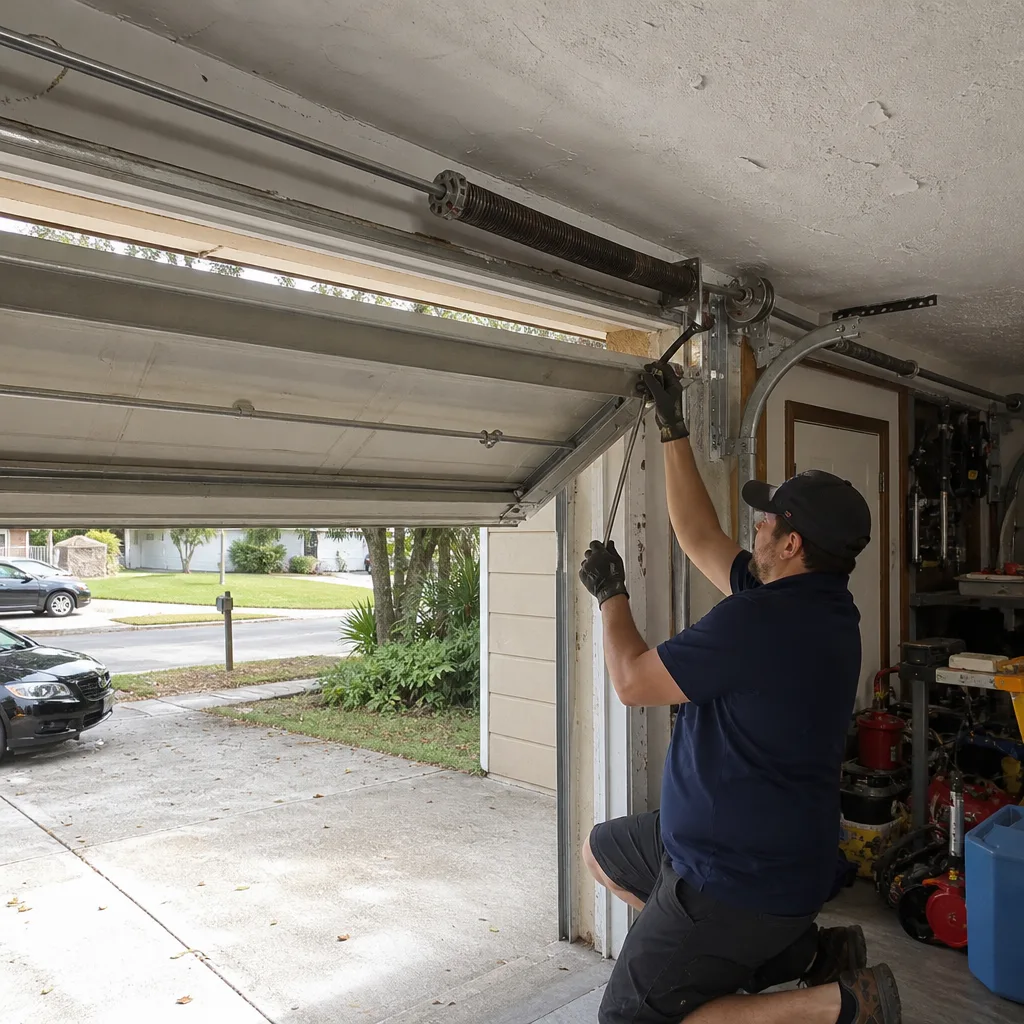
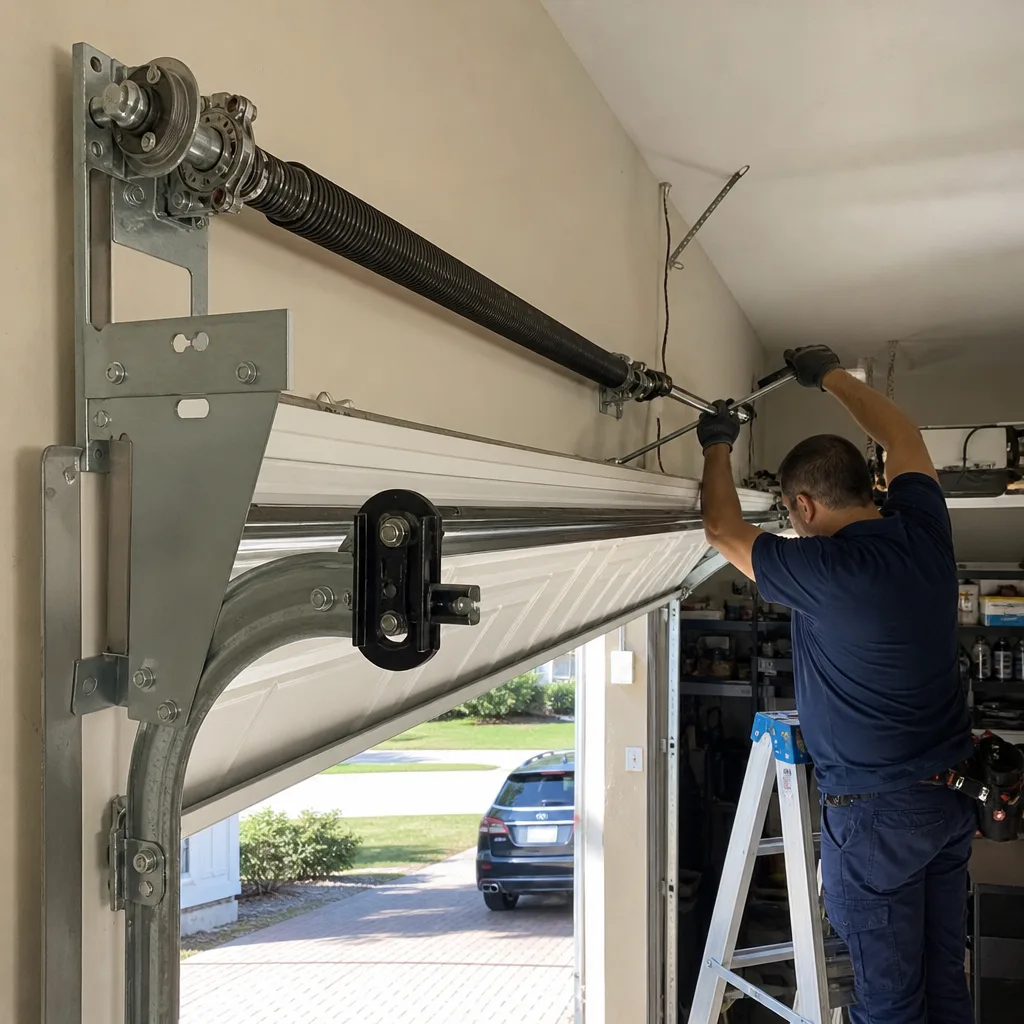
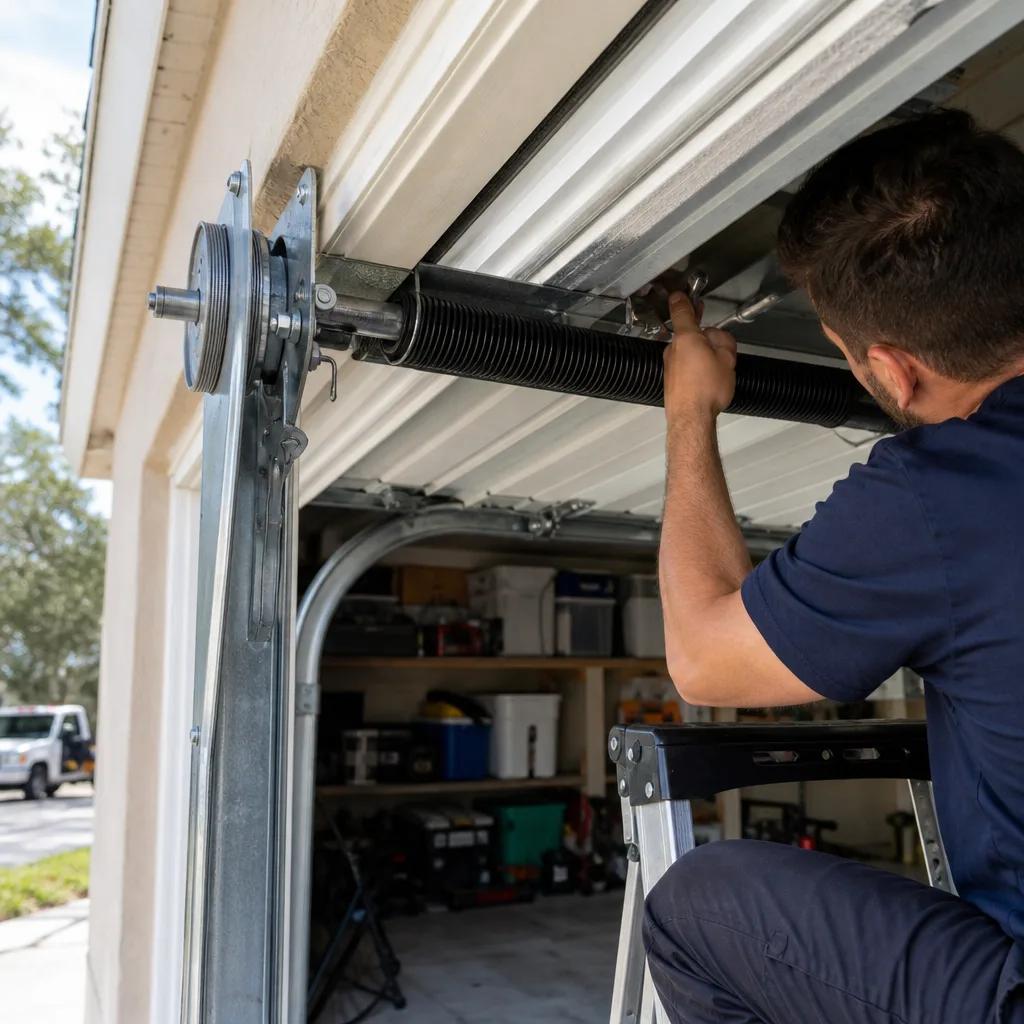
A torsion spring, the horizontal coil above your door that does most of the lifting, is wound under tension. The winding process stores enough force in that spring to lift a 300-pound door hundreds of times. If the spring snaps during installation, or if a winding bar slips, the released force can break bones, lacerate skin, or cause head trauma. We’ve seen the aftermath: a two-car garage in Winter Park where a homeowner’s attempt resulted in a broken wrist and a three-week wait for the repair.
Garage door cables are equally dangerous because they’re the mechanism that transfers the spring’s tension to the door. A snapped cable in motion can whip with enough force to cause serious lacerations or eye damage. Cable replacement requires releasing spring tension safely, which means winding bars, proper technique, and a lot of respect for the equipment.
We’re not going to give you step-by-step DIY instructions for these repairs, because that would be irresponsible. What we will tell you is what to check, so you know when it’s time to make the call that keeps everyone safe:
- Look at the torsion spring above the door. If you see a visible gap in the coil, the spring is broken. You’ll also hear a loud bang when it happens, like a firecracker in the garage.
- Check the cables on each side. If a cable is frayed, kinked, or has slipped off the roller, stop using the door immediately. An unbalanced door with a failed cable can come down hard.
- Look for wear points on the bottom bracket. The bottom bracket holds the cable to the bottom of the door, and it’s under constant tension. If the bracket is rusted or the cable is pulling through, that’s a professional repair.
Related: Garage Door Cable Repair in Orlando covers what cable repair involves.
Common Mistakes to Avoid
- Using WD-40 on garage door springs and rollers. WD-40 is a solvent, not a lubricant. It strips away the grease the manufacturer applied and accelerates wear. Use a white lithium or silicone-based garage door lubricant instead, and apply it sparingly to the spring coils, hinges, and rollers.
- Bypassing the photo-eye sensors to close a door that won’t shut. The sensors are there to stop the door from closing on a child or pet. Bypassing them is a safety code violation and a serious injury risk. If your sensors won’t align, clean the lenses and check for misalignment before doing anything else.
- Overtightening or loosening the red emergency release cord. The red cord disengages the door from the opener so you can open it manually. Don’t modify it, shorten it, or tie it up. It needs to hang at a height where an adult can reach it but a small child cannot.
- Buying the cheapest spring you can find online. We see imported aftermarket springs in Orlando that are wound with inconsistent tension and fail within 18 months. A quality spring pair costs $60 to $120 and lasts 10,000 to 20,000 cycles. The cheap ones don’t.
- Ignoring the permit requirement for door replacement. This is the mistake that costs homeowners the most money, and it doesn’t surface until the house is under contract. If you installed a garage door in Orlando without a permit, the title company or buyer’s inspector will likely find it during a sale.
- Running the balance test with the opener still engaged. The balance test only works when the opener is disconnected via the red release cord. If the opener is still engaged, you’re testing the opener, not the door’s natural balance.
- Waiting until the door won’t open at all to call for service. Garage doors almost always give warning signs first: a louder-than-normal closing sound, unusual vibration, a door that sits slightly uneven when closed. If you notice any of these in your Orlando home, address it before the door fails completely.
When to Call a Professional
Call a professional if your spring is broken, a cable is frayed or off the drum, the door is coming down too fast, or you need a full replacement under Orlando’s permit requirements. Also call if you’ve been wrestling with a problem for more than an hour. The point of diminishing returns on DIY garage door work arrives quickly, and a homeowner with a half-disassembled door is in a worse position than the one who called first. Marlow Garage Door Repair Orlando offers free estimates in Orlando. Call (850) 790-4744 and we’ll give you a written price before any work starts. Jaylen Ross leads our team, and every tech arriving at your door has been background-checked and factory-trained on Genie, LiftMaster, and Chamberlain systems, among others. We’re the Marlow Garage Door Repair Orlando home service team for homeowners across the metro.
Frequently Asked Questions
Spring replacement in Orlando typically costs $150 to $290 for a standard torsion spring pair, including labor. The final price depends on spring type, door weight, and whether you need one or both springs replaced. We deliver a written price before any work starts, and that number doesn’t change. Call (850) 790-4744 for an exact quote, estimates are free.
Florida law does not prohibit you from replacing your own garage door spring, but neither the law nor your insurance company will protect you if the job goes wrong. Torsion springs store lethal energy, and a mistake during winding can cause serious injury. Most manufacturer warranties also void coverage if an unqualified person services the door.
Yes, residential garage door replacement requires a building permit in most Orlando-area jurisdictions, including Orlando proper. The permit must be pulled by a licensed contractor or the homeowner as an owner-builder, and the completed work must pass an inspection. Unpermitted work can delay or derail a home sale.
We understand that a broken garage door is urgent, and our dispatch team works to schedule repairs as quickly as possible. Live phone support is available 24 hours a day, 7 days a week. Call (850) 790-4744, and a real person will answer.
No. Our written price is locked before any work begins. If the technician finds additional issues, we’ll show you a new written price and get your approval before doing anything else. The number on the invoice matches the number you agreed to, every time.
Yes. Our service vehicles are stocked with springs, cables, rollers, hinges, sensors, and opener components for the major brands we service, including Clopay, Genie, and LiftMaster. Most spring and cable repairs in Orlando are completed the same day, in a single visit.
The Bottom Line
Most Orlando homeowners should DIY the simple stuff: lubrication, sensor alignment, weather seal replacement, and the monthly balance test. For more guides & resources, see our blog. Those tasks are safe, fast, and inexpensive. Everything involving springs, cables, tracks, or a full door replacement belongs in professional hands, both because the physical danger is real and because Florida’s permit requirements make unlicensed work a legal liability. The question isn’t whether you could do the repair. It’s whether the risk and the hidden costs are worth the parts-bill savings. For us, the answer is usually no. For spring and cable work in Orlando, we’ll give you a written price, do the job right, and back it with our 365-Day Done Right Promise. That’s a better deal than a weekend in the ER.
Written by Jaylen Ross, Owner at Marlow Garage Door Repair Orlando, serving Orlando since 2002.
See the difference
 Before
 After
After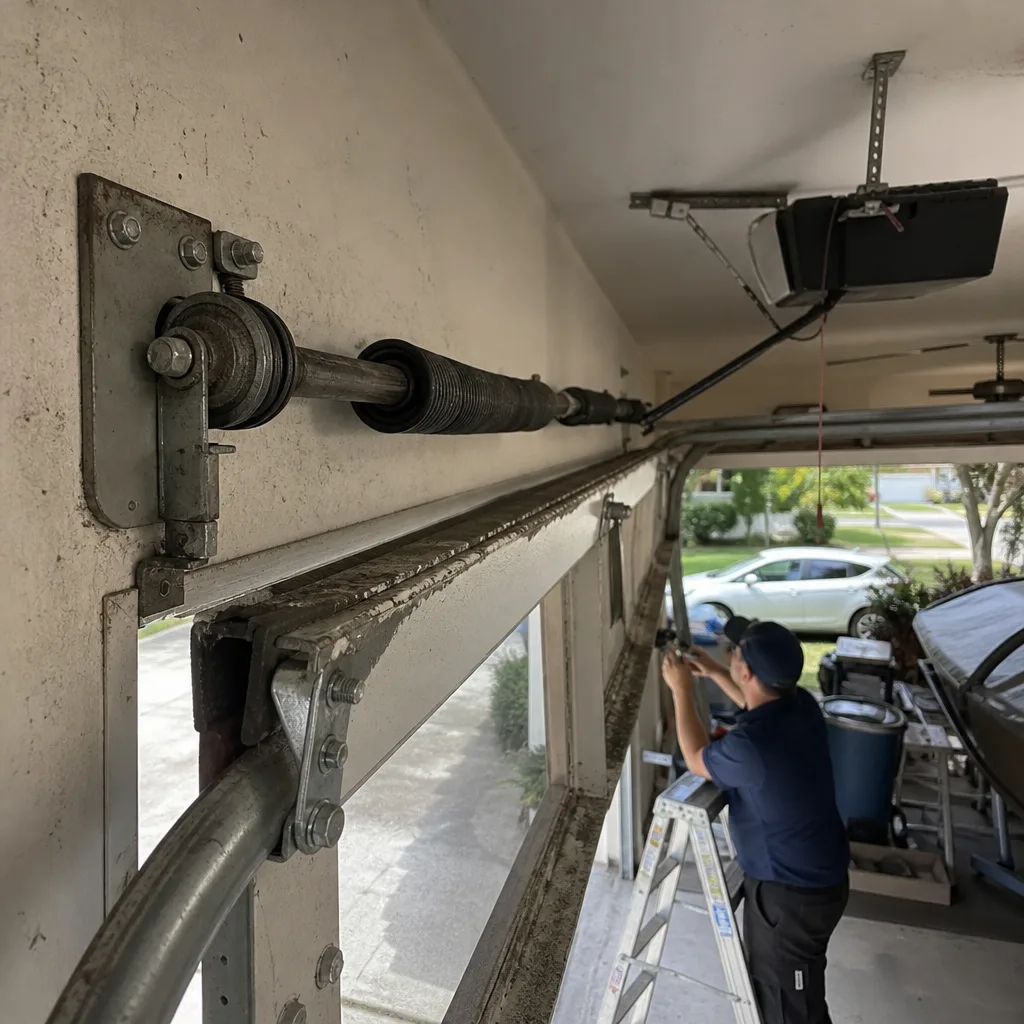 Before
 After
After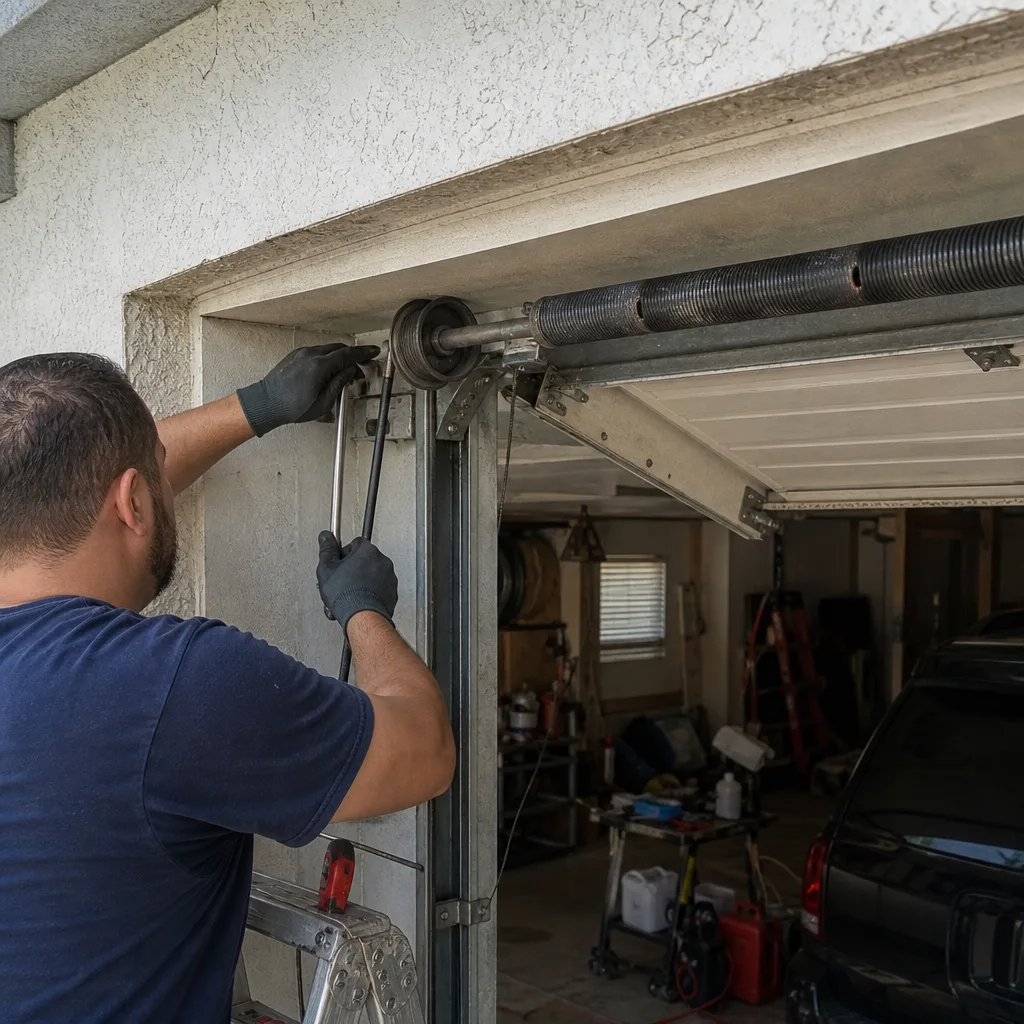 Before
 After
After