
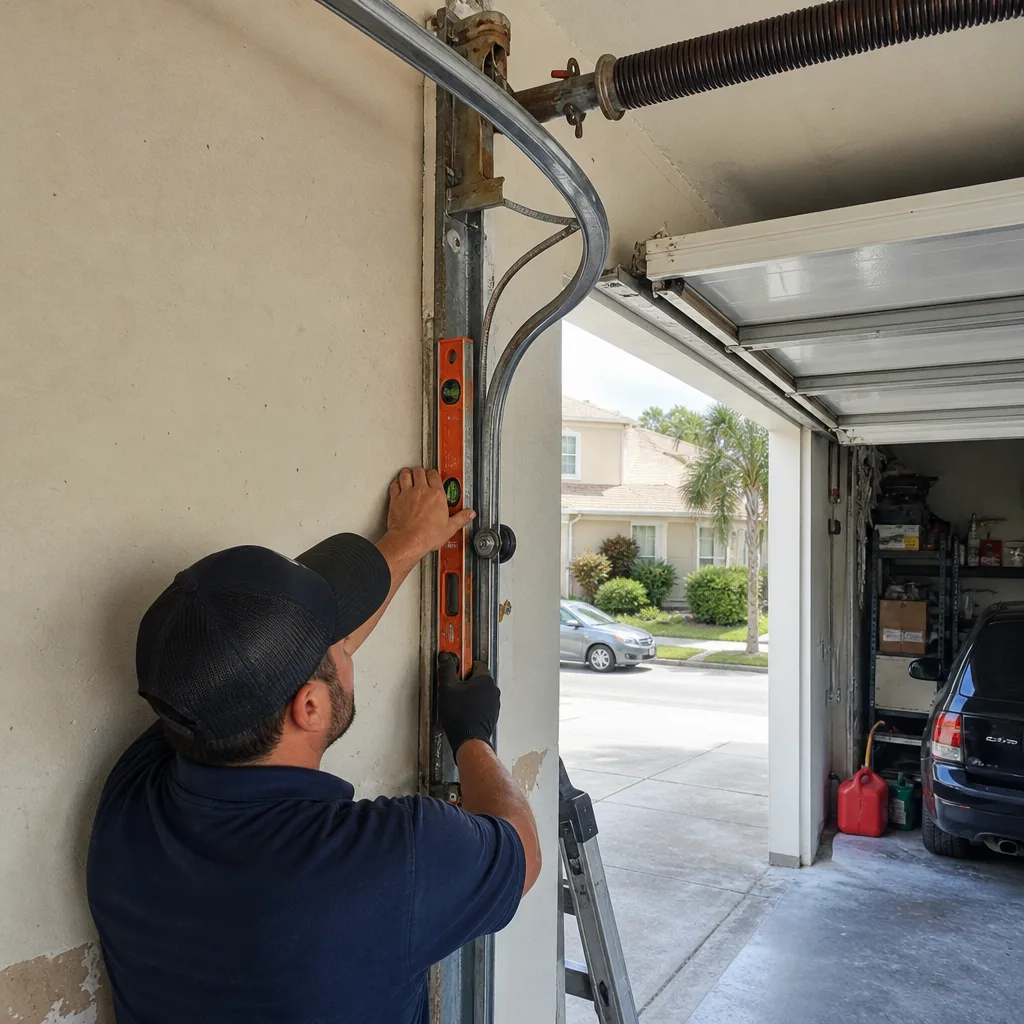
Last updated October 16, 2026
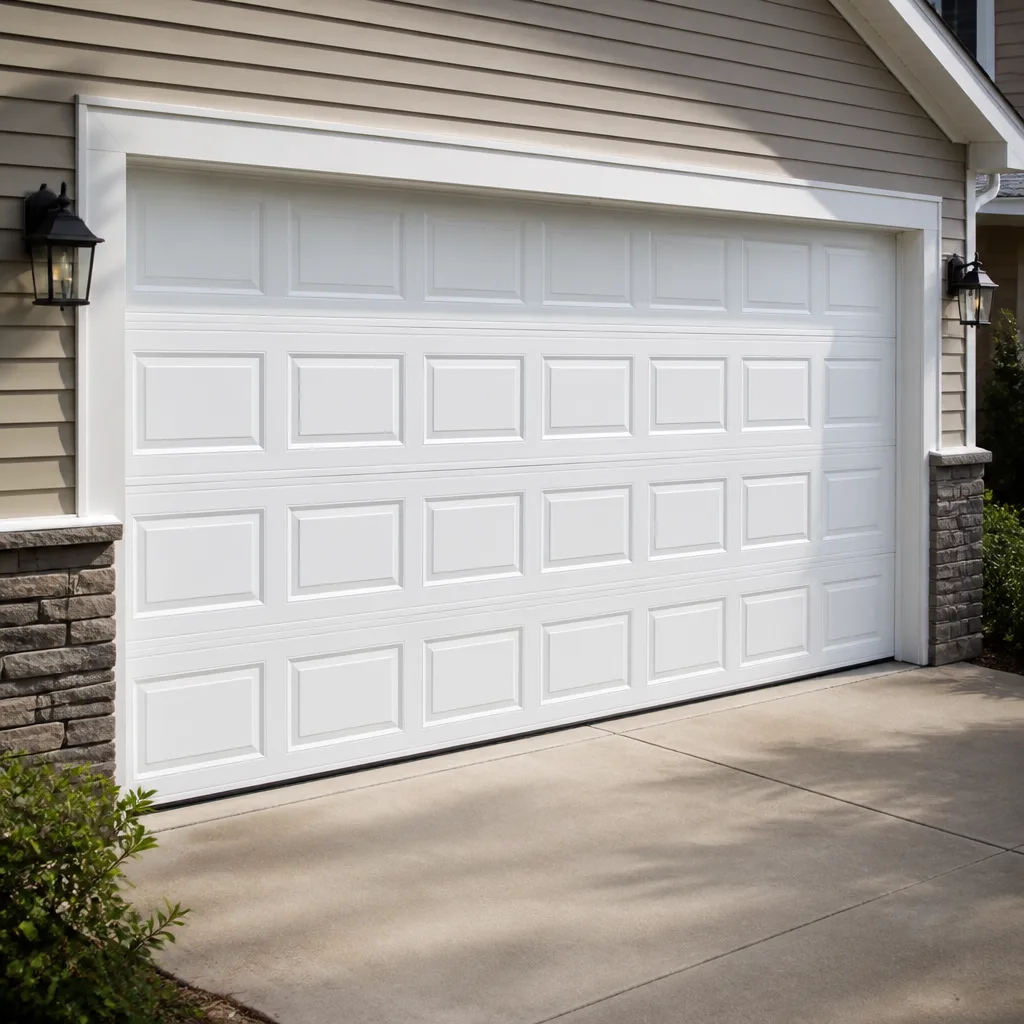 Raised-panel steel
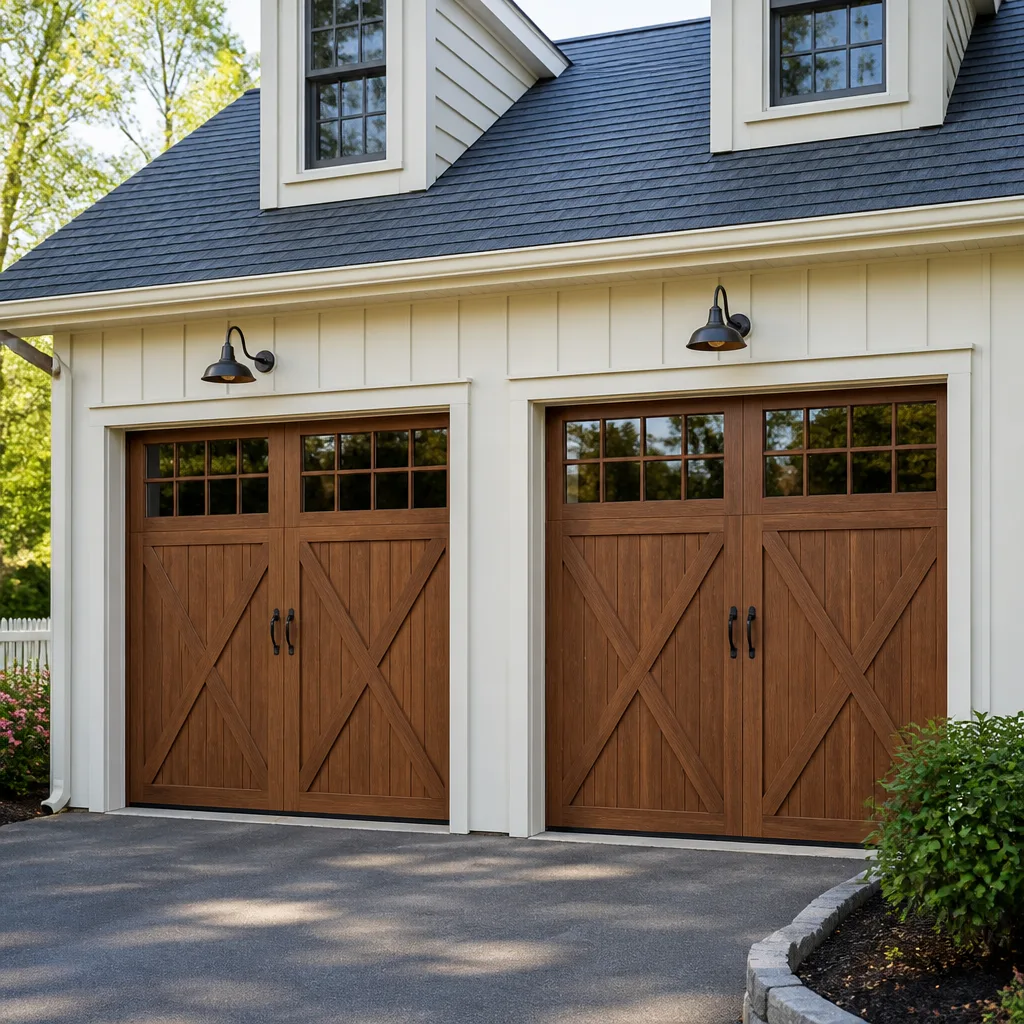 Carriage house
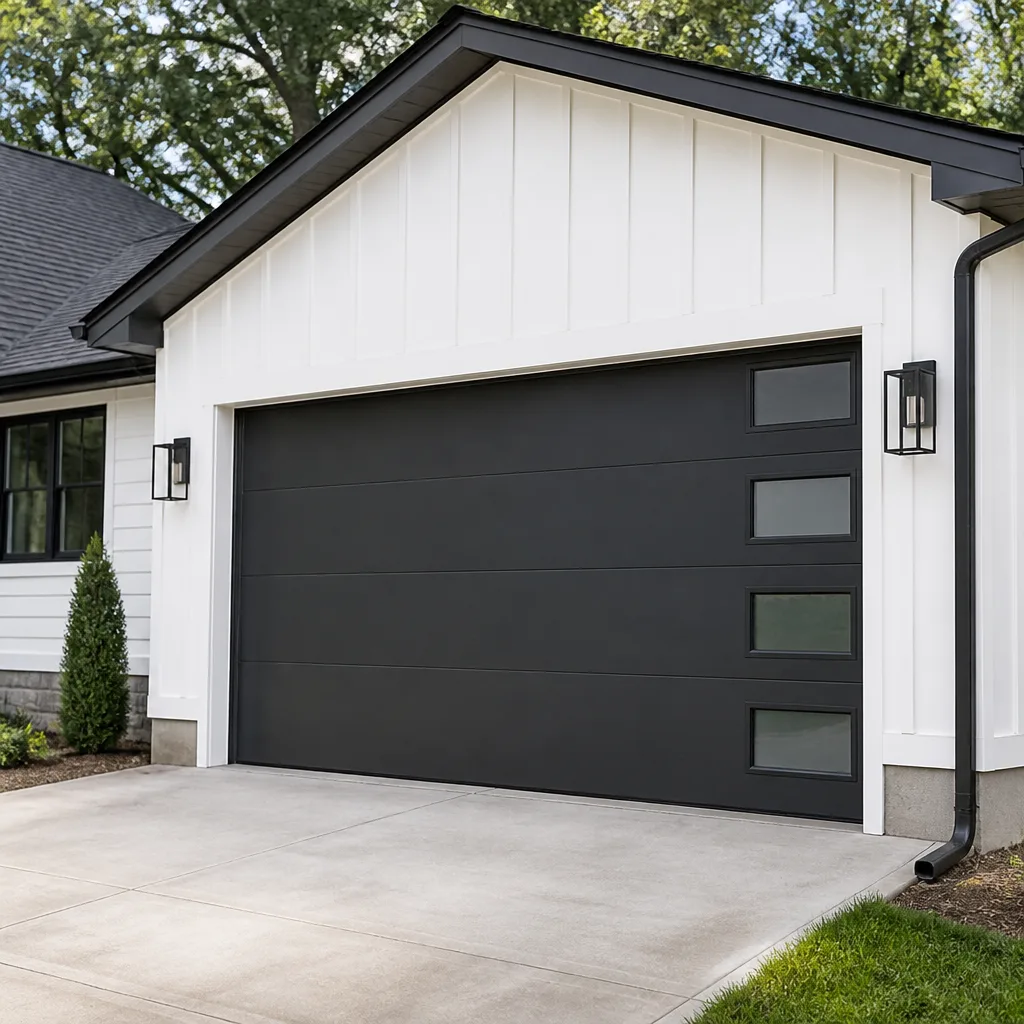 Modern flush
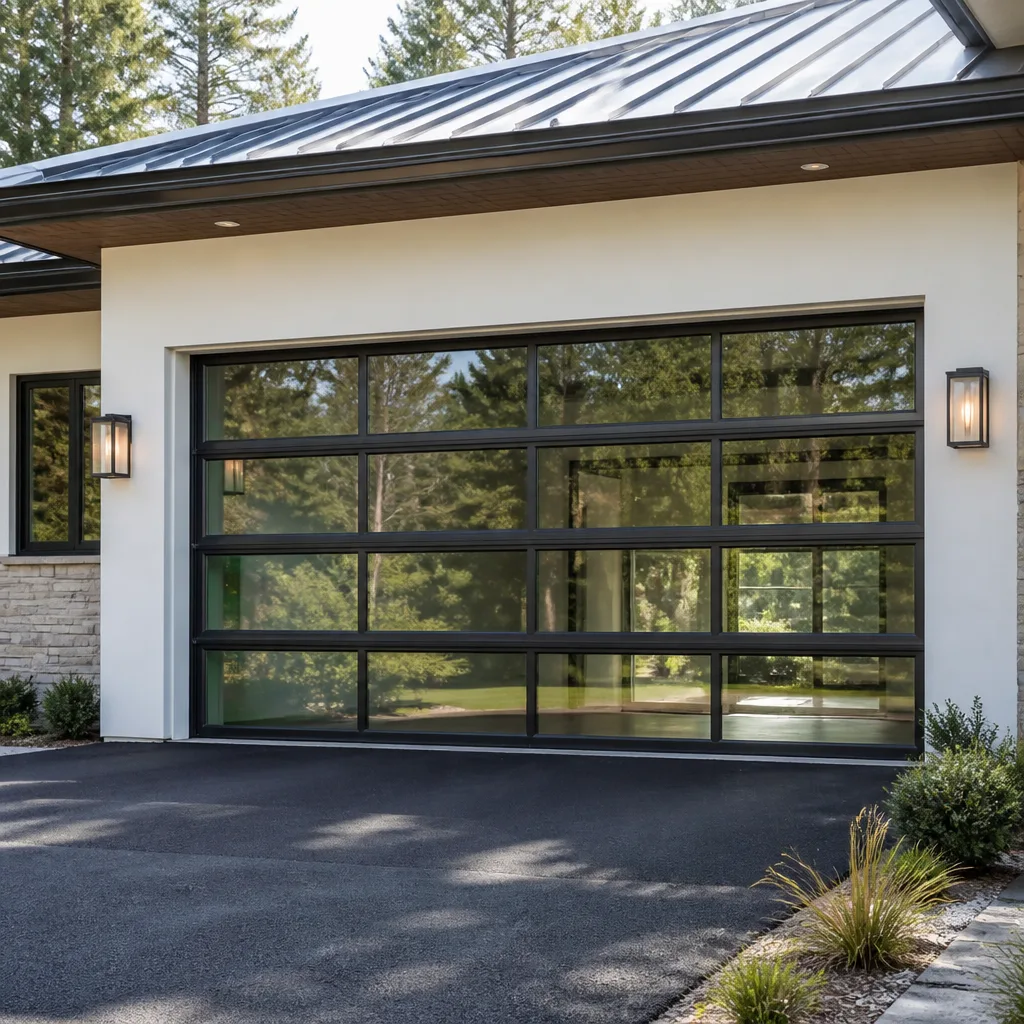 Full-view glass
 LiftMaster openers
 Chamberlain openers
Full 25-point door and opener safety check with every visit - springs, cables, rollers, tracks, and your LiftMaster or Chamberlain opener included
You get a price before we start. It does not change when the truck arrives.
Get your free estimateGarage Door Warning Signs: A Orlando Homeowner’s Reference Guide
A garage door gives you an average of three to six weeks of warning signs before it fails completely. The problem is those signs feel minor enough that most people ignore them until the door is stuck halfway down on a Tuesday morning. In Orlando, where heat and humidity accelerate metal fatigue year-round, those warnings show up earlier and move faster than they do elsewhere. This guide walks through the subtle signals, the ones you’ll notice if you know what to look for, so you can catch a failing spring or fraying cable while it’s still a $200 job instead of a $900 emergency. For a deeper dive, see The Complete Guide to Garage Door in Orlando.
Quick Answer
Garage door warning signs in Orlando fall into five main categories: unusual sounds (high-pitched squeaks, metallic pops, uneven grinding), slow or uneven movement, visible cable fraying near the bottom bracket, misaligned or bowed tracks, and weather-related shuddering after rainstorms. If you notice any of these, you typically have a few weeks to act before the door fails completely. Call (850) 790-4744 for a free estimate from a Orlando technician who names the price before touching a wrench.
Styles & brands we work with
Table of Contents
- The Sound Profile of a Spring About to Snap
- Why Your Door Moves Slower in the Morning Than the Afternoon
- How to Spot Cable Fraying Before It Snaps
- The 30-Second Misalignment Test
- The Florida-Specific Warning: Post-Rain Shuddering
- Five Minor Signals That Mean More Than You Think
- What These Repairs Cost in Orlando
The Sound Profile of a Spring About to Snap
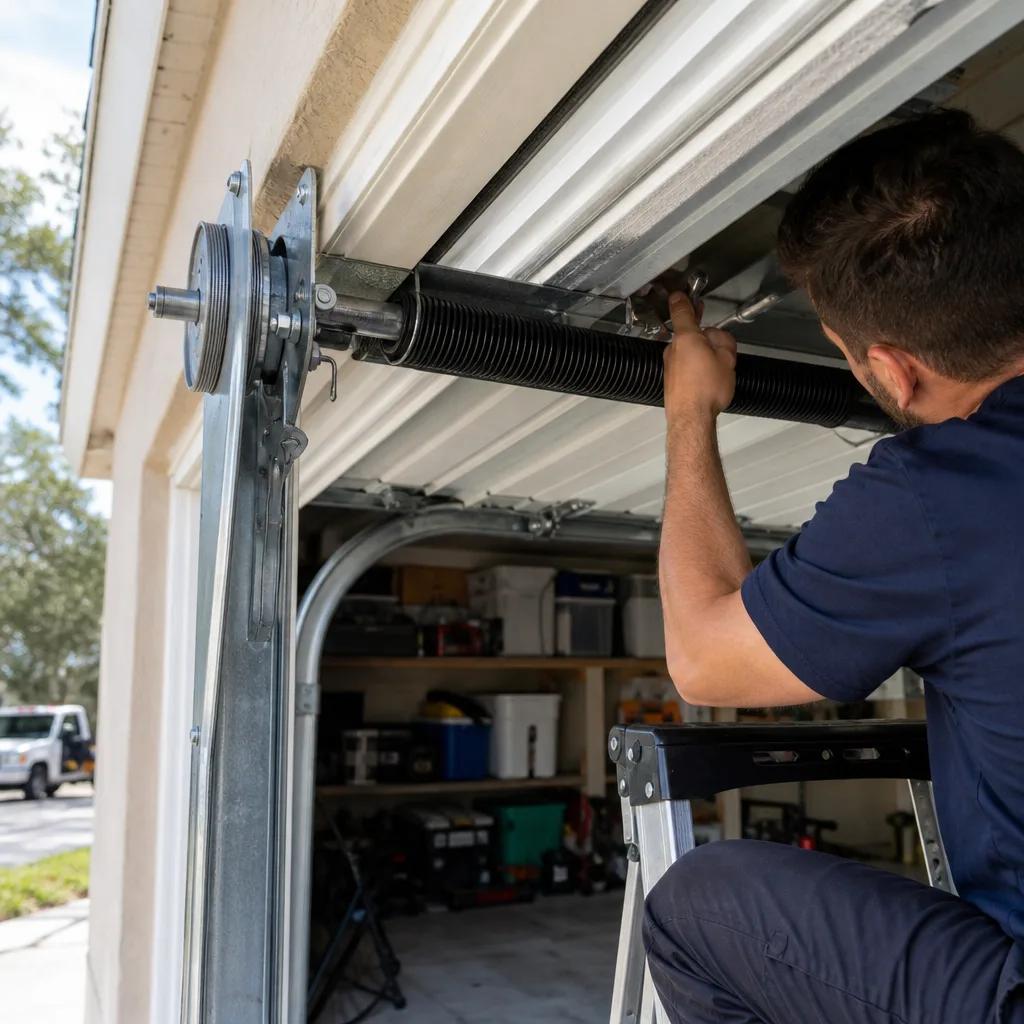
Not every garage door noise is the same, and treating them all as “grinding” means missing the one sound that predicts a snap with surprising accuracy. A torsion spring, the horizontal coil above your door that does most of the lifting, makes specific sounds as it approaches failure. Learning to distinguish them is the difference between calling for a Garage Door Spring Repair in Orlando while the door still works and standing in your driveway at 7 a.m. staring at a door that won’t budge.
Here is the sound breakdown based on what we hear on service calls across Orlando neighborhoods like Audubon Park, College Park, and Conway:
- High-pitched metallic squeak, rhythmic with the door’s movement: This is the sound of spring coils rubbing against each other under tension. It means the spring’s lubrication has worn thin and the metal is wearing against itself. Left alone, this turns into pitting and weak points.
- A single loud “pop” or “bang” when the door opens or closes: This is a spring coil slipping or a cable catching. It’s not the spring snapping yet, but it’s the warning shot. The spring is losing its grip on the shaft.
- Low, uneven grinding that changes pitch as the door passes a certain point: This points to a bent shaft or a spring that’s no longer distributing tension evenly. The door is literally fighting itself.
- A sharp “ping” followed by the door feeling heavier: This is often a spring losing a fraction of its tension, not fully snapping but beginning to unwind. The door still moves, but it’s working harder every cycle.
If you hear any of these, do not try to touch, adjust, or spray the spring yourself. Torsion springs hold hundreds of pounds of tension, and when they let go, they let go violently. A trained technician knows how to de-tension safely, check the shaft and bearings, and replace the spring with the correct cycle-rated part. In our experience, catching a spring at the “squeak with rhythm” stage means a straightforward replacement. Catching it at the “bang” stage means the same replacement plus possible shaft or cable work.
For Orlando homeowners, this matters more because heat cycles accelerate the aging. A spring rated for 10,000 cycles might last eight years in a mild climate; in Orlando’s afternoon heat and evening humidity, the same spring often shows wear at six. The sounds are your early-warning system, and they do not fix themselves.
Why Your Door Moves Slower in the Morning Than the Afternoon
A garage door that takes noticeably longer to open at 7 a.m. than it does at 4 p.m. is telling you something specific about the springs, not the opener. Openers are constant-speed machines; they either run or they don’t. When a door moves slowly, it’s because the springs are no longer counterbalancing the door’s weight the way they should, and the opener is straining to compensate.
Here is what’s happening in technical terms. A garage door weighs between 130 and 400 pounds depending on size and material. The springs, whether torsion or extension, are wound to offset almost all of that weight. The opener only needs to lift about 10 to 15 pounds when the springs are doing their job. As springs age and lose tension, they offset less. The opener now has to lift 40, 60, or 80 pounds. It slows down.
The morning-versus-afternoon difference is the tell. In Orlando, overnight temperatures drop, and the metal in the springs contracts slightly. Cooler metal is stiffer, so a weakened spring offers even less lift in the morning. By afternoon, the sun has been beating on the garage door panels for hours, the metal expands, and the spring works a little better. The door speeds up. If you notice this pattern, the springs are already past their midpoint and failing gradually.
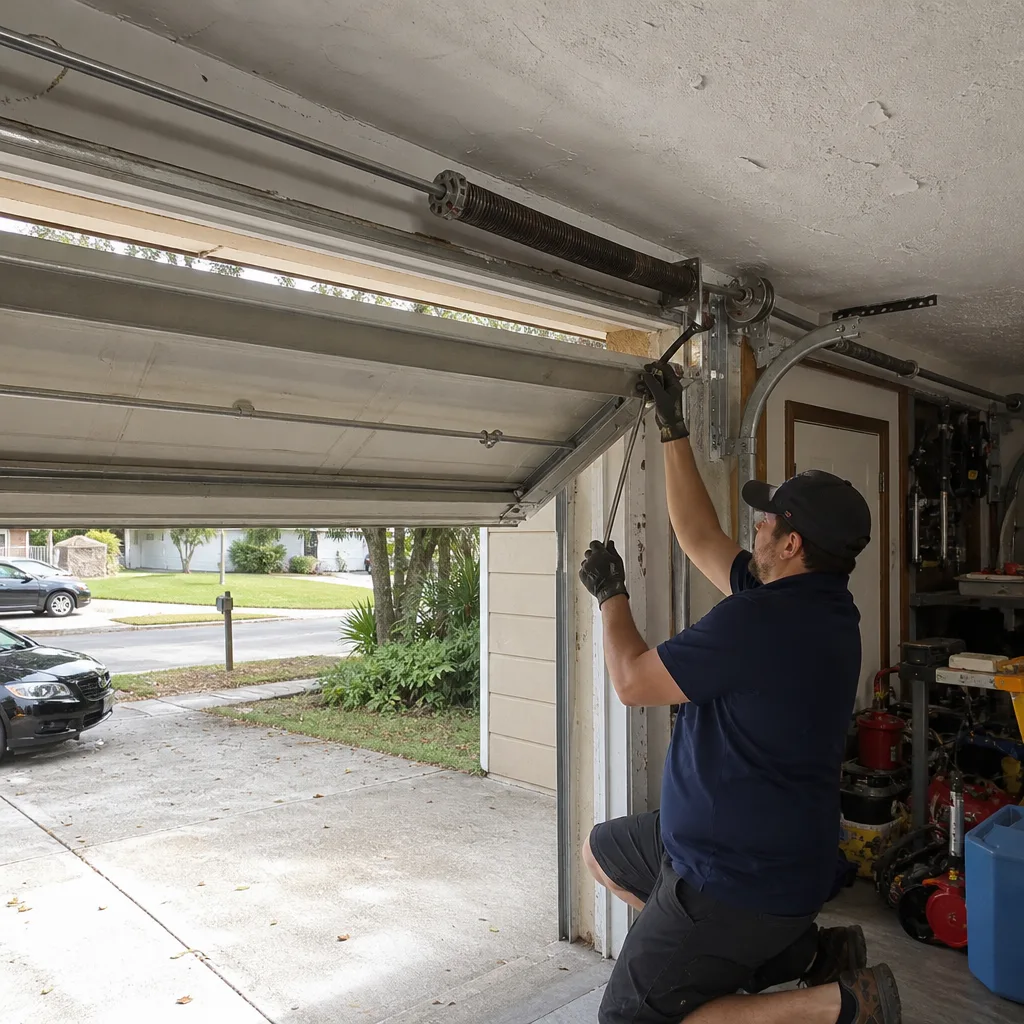
The fix is Garage Door Repair in Orlando that replaces the springs before they fully fail. Spring replacement typically runs $150 to $290 per spring, depending on spring type, cycle rating, and door size. You’ll see the exact number in writing before we start, not after. Waiting until the door barely opens means the opener motor has been working against strain for months, and you may end up replacing that too.
How to Spot Cable Fraying Before It Snaps
Garage door cables are the steel wires that run along each side of the door and connect to the bottom brackets. They carry the door’s weight when it’s in motion, transferring it to the springs. When a cable frays and then snaps, the door can drop violently to one side, which is dangerous and destructive. The problem is most homeowners never look at the cables until it’s too late.
There is one specific point where fraying starts in almost every case: the bottom bracket on each side of the door. This is where the cable makes a sharp turn and takes the most stress. Over hundreds of cycles, individual wire strands begin to break at this bend. If you look at the bottom corner of your door, right where the cable connects to the bracket, you may see tiny hair-like strands of steel poking out or the cable looking fuzzy instead of smooth.
Here is a three-step inspection you can do in under a minute without touching anything under tension:
- Open the door fully so the cables are slack enough to see clearly.
- Look at the bottom bracket on each side, specifically the inch of cable right where it attaches. Look for fuzz, stray strands, or a flattened section.
- Run your eyes along the cable track from the bracket up to the drum at the top. Look for rust, kinks, or sections that look thinner than the rest.
If you see any of these, call a technician who handles Garage Door Cable Repair in Orlando rather than waiting. A frayed cable is under tension even when the door is open, and the wrong move with pliers or a wrench can snap it sideways into your face or hands. Cable replacement is far less expensive than the damage a snapped cable causes when the door drops. In Orlando, where humidity accelerates rust on exposed steel, we recommend checking cables twice a year, once in spring and once after the rainy season peaks in September.
The 30-Second Misalignment Test
Orlando’s heat does things to garage door tracks that northern installers never have to think about. Steel expands when it heats up, and a garage door track that’s been installed tight against the wall with no room for expansion will bow outward over time. The door then starts binding, scraping, or jerking as the rollers try to follow a track that’s no longer straight.
The good news is there is a simple test that reveals track misalignment before it turns into a mechanical failure:
- Stand inside the garage with the door closed. Position yourself at the center of the door, a few feet back.
- Look at the gap between the track and the door on both sides. The track should run parallel to the door edge, with a consistent gap from top to bottom.
- Trace your finger along the outside of the track where it bolts to the wall. Any section that’s noticeably closer to or farther from the wall than the rest is a bend.
- Open the door halfway and repeat. Tracks can look fine closed but reveal a bow when the rollers are at the midpoint.
This test takes 30 seconds and tells you whether your tracks are holding up under Orlando’s thermal stress. If you find a bow, don’t try to straighten it with a hammer or channel locks. Track straightening requires loosening the mounting brackets, adjusting the track in small increments, and re-tensioning the bolts. A bent track puts uneven force on the rollers, which then wear out prematurely, and the cascade continues.
Brands like Clopay and Amarr build doors with thermal expansion accounted for, but installation quality still varies, and Orlando’s uninsulated garages, which bake in the afternoon sun, test every component harder. If you are not sure whether your track is bent or you are just seeing an optical illusion from shadows, a technician can verify it in the same visit as a routine check.
The Florida-Specific Warning: Post-Rain Shuddering
There is a warning sign that Orlando homeowners report more than almost anywhere else: the door worked fine yesterday, it rained overnight, and now it shudders, sticks, or groans the next time it cycles. This is not an opener problem. This is humidity attacking the hardware.
Here is what actually happens. Orlando’s summer humidity routinely hits 80 to 90 percent. When rain saturates the air and temperatures swing, condensation forms on cold metal surfaces inside the garage: springs, cables, hinges, and the track. The moisture mixes with dust and whatever lubrication remains, forming a gummy paste that changes how the door moves. The shuddering is the door’s components moving through that paste, or it’s rust forming on unpainted steel and catching the rollers.
Doors from manufacturers like Wayne Dalton and Craftsman use varying grades of steel and coating. Some handle Florida humidity well; others, particularly older units or doors that were repainted without the right prep, start showing surface rust within a single rainy season. The shutter you feel in the wall is the warning.
The fix at this stage is straightforward: a thorough hardware cleaning, proper lubrication with a silicone or lithium-based product (never WD-40, which is a solvent that strips existing lubrication), and inspection of any rust-damaged components. If the shuddering has been going on for weeks, the rust may have already pitted the rollers or bearing plates, and those need replacement before they fail under load.
If you notice your door shuddering specifically after rainstorms and then smoothing out after a few dry days, that’s not something to ignore. Each cycle with poor lubrication wears the metal. Call a technician who will look at the hardware, not just tell you to replace the opener. In Orlando, this is one of the most common issues we address, and the solution is rarely as expensive as the damage it prevents.
Five Minor Signals That Mean More Than You Think
Beyond the big warning signs, there are smaller signals that most articles gloss over. These are the ones that, in our experience, show up in the first or second week of the three-to-six-week warning window. None of them seem urgent on their own. All of them are.
- The door reverses on its own right after touching the ground. This is often a limit-setting issue, but it can also mean the door panels are warping from heat exposure and the safety sensors are misreading the floor contact. A warped panel gets worse every week it goes unaddressed.
- You hear a faint “tick” every time the door passes the same point. That’s a roller with a flat spot or a loose hinge pin. It’s small now, but that irregular load transfers to the cables and springs, wearing them faster.
- The garage door opener sounds like it’s working harder than it used to. A change in motor pitch, from a smooth hum to a strained whine, means the door is getting heavier for the opener to lift. That’s a spring issue, not an opener issue.
- Small flakes of rust under the door when you sweep. That’s metal wearing off a component, usually a cable or a hinge. It’s a visible countdown.
- The door looks slightly crooked when it’s halfway open. Even a one-inch difference from side to side means uneven spring tension or a stretched cable. Both will worsen.
Each of these on its own is easy to dismiss. Together, or in sequence over a few weeks, they paint a clear picture: the door is failing, and it is failing on a schedule. Catching any one of them early means a smaller repair bill and no morning where the car stays stuck in the garage.
What These Repairs Cost in Orlando
Knowing what a repair costs before you pick up the phone changes the entire conversation. In Orlando, garage door repair pricing is relatively consistent across neighborhoods, though factors like door size, spring type, and whether the door is from a major manufacturer like Clopay or Amarr all affect the final number. Here are the ranges we quote in this market:
- Single torsion spring replacement: $150 to $220
- Double spring replacement (both springs): $240 to $390
- Cable replacement (one side): $120 to $180
- Cable replacement (both sides): $200 to $320
- Track realignment or bracket repair: $100 to $180
- Roller replacement (full set): $90 to $160
- Complete spring, cable, and roller overhaul: $380 to $600
These are the ranges, not the quote. The exact number depends on your door’s weight, the spring’s cycle rating, and the hardware’s condition. What matters is that the price you get before work starts is the price you pay when it’s done. No adjusted invoice, no surprise upcharge for a part that was “worse than expected.” At Marlow Garage Door Repair Orlando, every job starts with a written price that locks before any wrench turns, and every repair is backed by a 365-Day Done Right Promise. If the fix isn’t right, we make it right for a full year, in writing.
For Orlando homeowners in neighborhoods like Baldwin Park, Thornton Park, or Dr. Phillips, catching these warning signs early is what keeps a repair in the lower end of those ranges. Waiting until the door fails usually means replacing components that could have been saved, which pushes the total toward the higher end.
Common Mistakes to Avoid
- Ignoring a change in sound because the door still works. Sound changes are the earliest and most reliable warning you get. A door that still opens is a door that can still be repaired cheaply.
- Spraying WD-40 on the springs and cables. WD-40 dissolves the existing lubrication and dries quickly, leaving metal surfaces with less protection than before. Use silicone or lithium-based garage door lubricant instead, or have a technician apply the right product.
- Trying to adjust or replace torsion springs yourself. Torsion springs hold hundreds of pounds of tension. The winding bars can slip and the spring can release that tension in a fraction of a second. This is one of the few home repairs that regularly causes serious injury to DIYers.
- Assuming the opener is the problem when the door moves slowly. The opener is almost never the issue. Slow movement means springs are failing. Replacing the opener first just adds a $300 to $500 expense to a repair that was otherwise straightforward.
- Waiting for “time to deal with it” because the door still works. In Orlando, heat and humidity mean a minor problem becomes a major one in weeks, not months. The three-to-six-week warning window is not an estimate; it’s the average.
- Hiring based on the lowest phone quote without a written price. A verbal estimate over the phone can change the moment a tech sees your door. Get the price in writing before work starts, every time.
- Not checking cables because they are “out of sight.” The bottom bracket cable is visible in under a minute, and it’s where failures start. That one-minute check twice a year catches the problem at its cheapest point.
See the difference
 Before
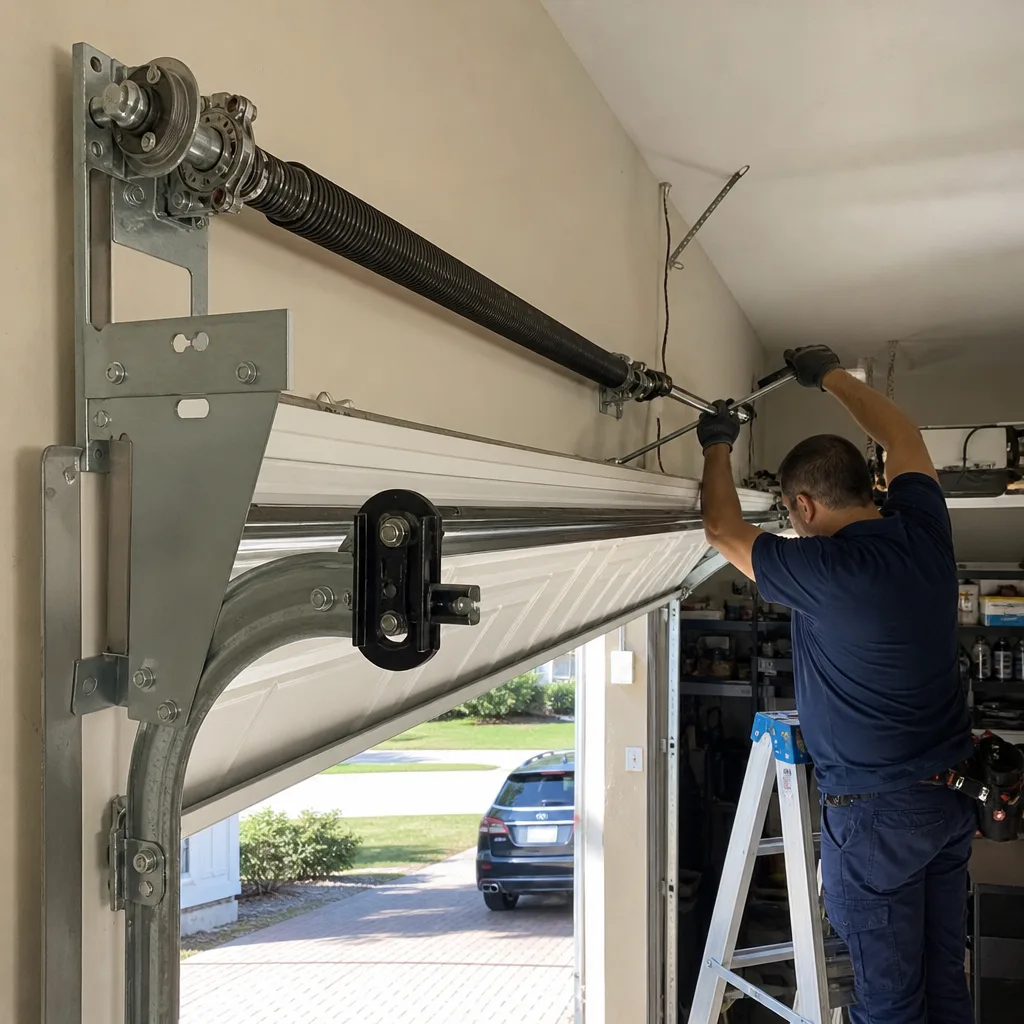 After
After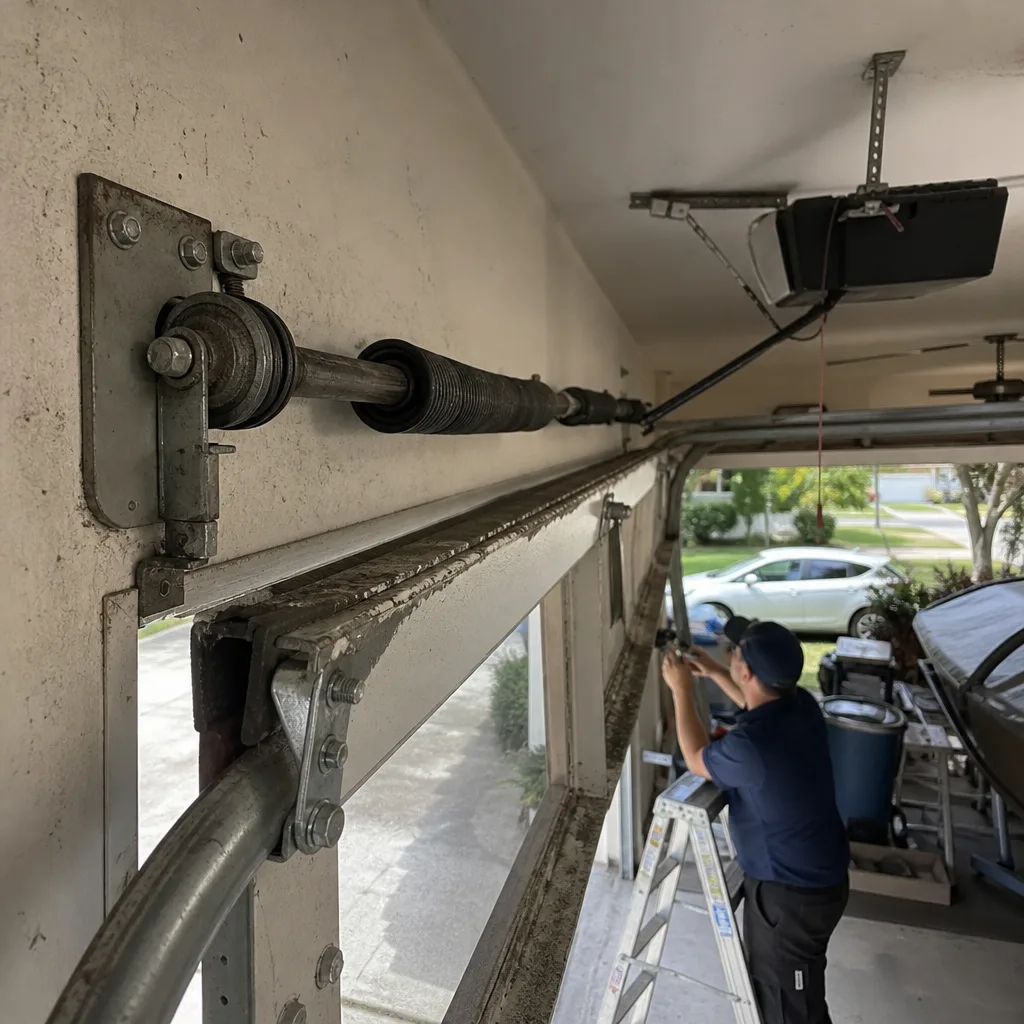 Before
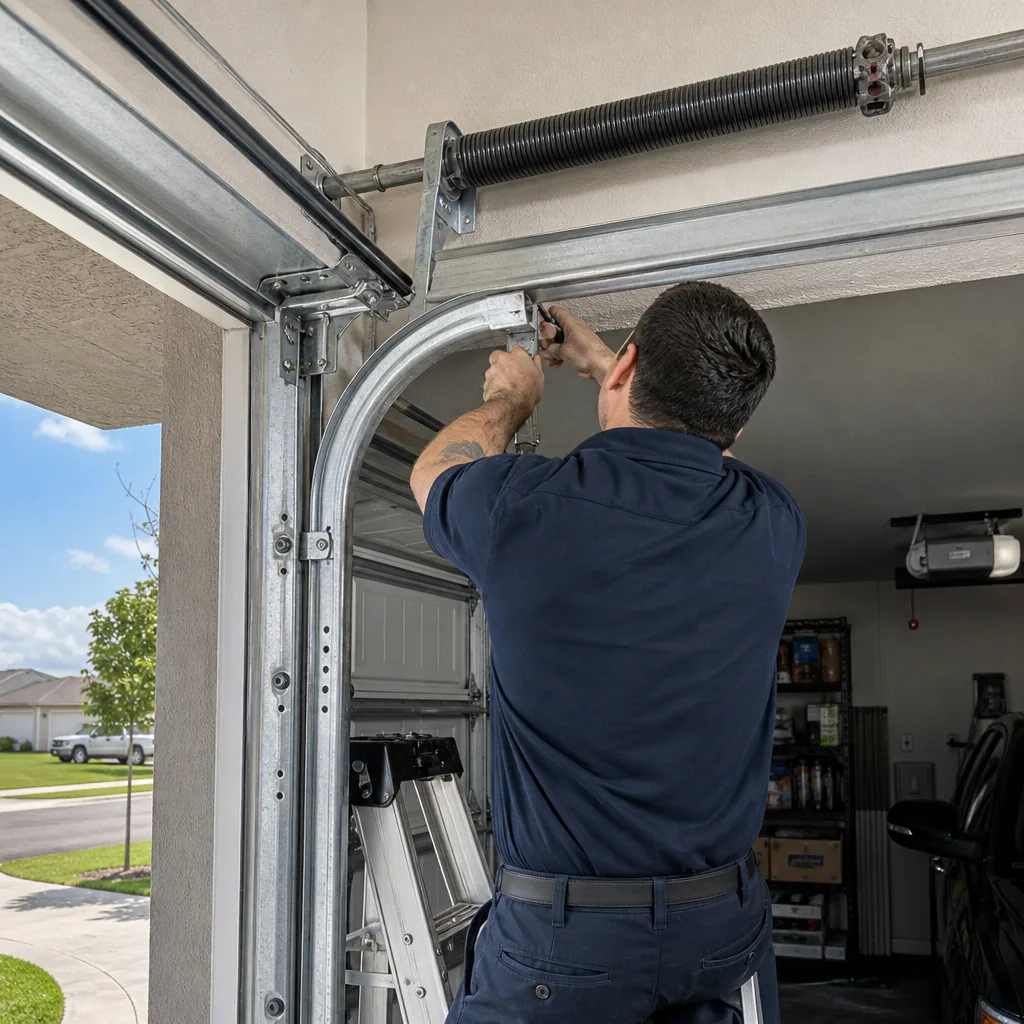 After
After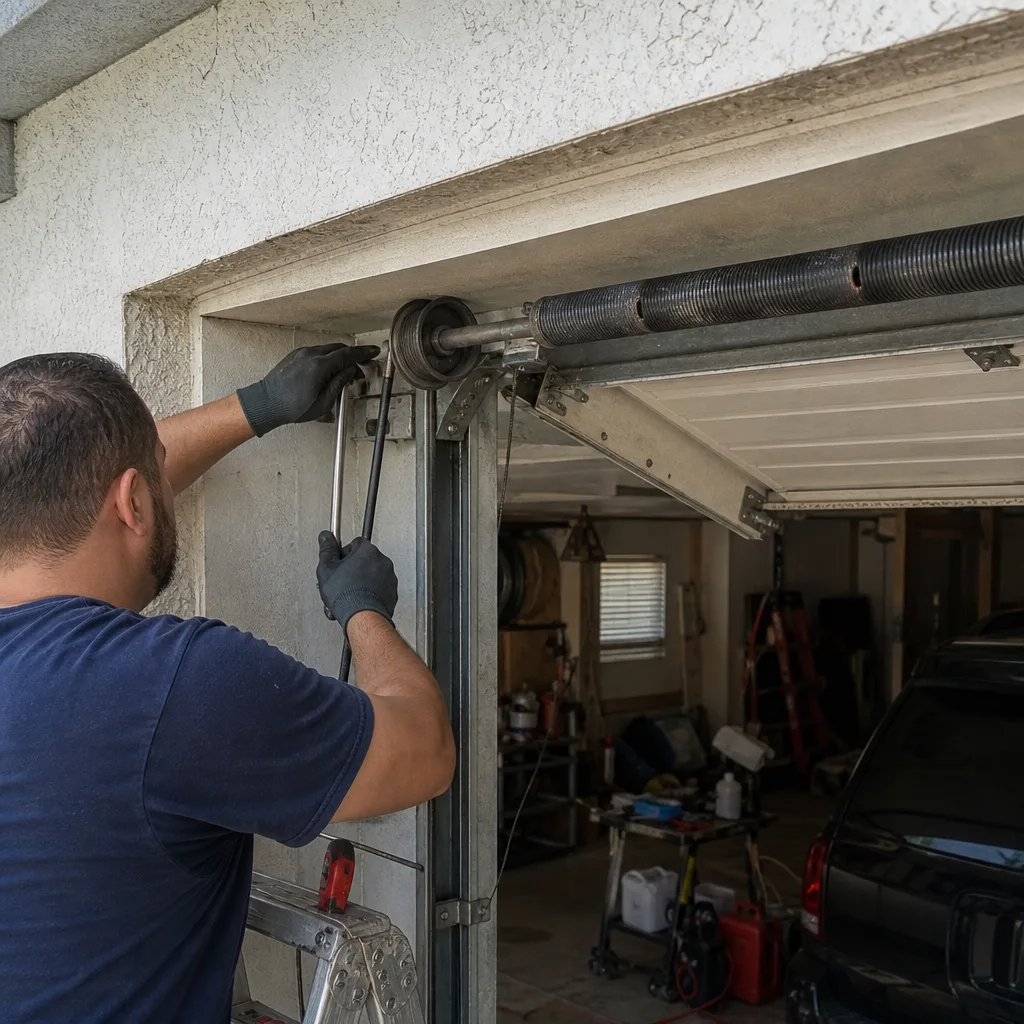 Before
 After
AfterWhen to Call a Professional
Call a professional when you hear a spring popping, when your door moves slower in the morning, when you spot cable fraying at the bottom bracket, when your track fails the 30-second misalignment test, or when the door shudders after rain. Not sure who to trust? Read How to Hire a Garage Door Contractor in Orlando: A Step-by-Step Guide. These are the warning signs that mean the door is in the process of failing, and none of them get better with time. If the door is already refusing to open, jammed halfway, or the cables are visibly snapped, that call needs to happen today. Marlow Garage Door Repair Orlando offers free estimates in Orlando. Call (850) 790-4744 and a live person answers, 24/7, no voicemail and no callback queue.
Frequently Asked Questions
Single spring replacement in Orlando typically runs $150 to $220, while replacing both springs runs $240 to $390. The exact price depends on the spring’s cycle rating, wire gauge, and your door’s weight. Call (850) 790-4744 for a written quote, free, before any work happens.
Yes, most spring and cable repairs can be completed the same day in Orlando. Technicians carry common spring sizes and cable lengths on the truck, so a single-visit fix is standard. Call (850) 790-4744 to check current availability.
A spring about to break often makes a rhythmic high-pitched squeak as the door moves, followed by a metallic pop or bang on a later cycle. The squeak is coil-on-coil wear; the pop is a coil slipping on the shaft. Both are warnings that replacement is close.
Orlando’s high humidity causes condensation on cold metal garage door components during and after rainstorms. That moisture mixes with dust and existing lubricant, creating a gummy residue that makes the door stick, shudder, or groan. It’s a hardware and lubrication issue, not an opener issue.
A standard 10,000-cycle spring, rated for about 8 to 10 years in a mild climate, often lasts 6 to 7 years in Orlando’s heat and humidity. If you open and close your garage door more than four times a day, expect that lifespan to shorten further. Upgrading to a higher-cycle spring at replacement time is a cost-effective move in this climate.
No, not at Marlow Garage Door Repair Orlando. The written price you receive before work starts is the price on the invoice when the job is done. If the technician finds an additional issue, you’ll get a new written price for the extra work before anything else happens. You approve every number, every time. Call (850) 790-4744 and a live person walks you through it.
The Bottom Line
Your garage door talks for weeks before it fails. The pitch of a squeak, the speed difference between morning and afternoon, the fuzz on a cable at the bottom bracket, the bow in a track under Orlando heat, the shudder after a rainstorm, all of these are messages with a shared pattern. Catch them early and you are looking at a few hundred dollars and a same-day fix. Ignore them and you are looking at a door that fails at the worst possible moment, plus damage that could have been avoided. Orlando’s climate makes garage door maintenance more urgent than it is elsewhere. Explore more guides & resources to keep your door running smoothly. If you are in Orlando and any of these signs sound familiar, call (850) 790-4744 for a free estimate and a written price before anyone touches the door.
Written by Jaylen Ross, Owner at Marlow Garage Door Repair Orlando, serving Orlando since 2002.